Search

Fridays with Phil

Life, family and unshakeable faith

Category

Uncategorized

Help, I need somebody!

Lifou, New Caledonia.  March, 2014.
Lifou, New Caledonia. March, 2014.

Help, I need somebody, Help, not just anybody.”  They are great lyrics from the well-known Beatles song, Help.   They became a reality for me last week.

The picture above was taken after conquering a hike through thick rainforest to swim in a freshwater cave.  I was glad I had taken my walking stick, but even happier that my two son-in-laws and nephew were there to help me on this adventure.

I realised I would not have been able to traverse down or up the steep inclines without their help.  Without them I would have missed so much and never would have experienced swimming in an underground cave, taking a leap of faith and jumping into the black swimming hole.

With my legs and arms weakening from the effects of Motor Neurone Disease (read more via the “About MND/ALS” tab at www.fridayswithphil.com),  I have come to rely more and more upon the help of others.  This experience has highlighted that all of us need the help and togetherness of others to achieve things we could never achieve on our own.

As a leader of a Church, pre-MND days, I had no hesitation in asking for help and working together with others to achieve goals and vision that were for the benefit of others.  However, asking for help for myself was, and is, a different matter.  I have always found it easier to give than to receive.  How about you?

I have realised that not being able to receive help is not only a bad character trait but is also indicative of a very limiting and dangerous attitude: pride.  Living a life trying to cope all on your own, “She’ll be right mate”, or “I’m OK”, suggests that I don’t need your help or anyone’s help.  I have come to realise, I do and we all do.

None of us can achieve anything big, courageous or challenging without the help of others.  Confident and courageous people need help and need the togetherness of others to experience life to the max.

One thing I noticed, when those three strong young men took a slower trip down and a very slow trip back up from the cave, is that even though I was a physical burden to them, they found pleasure in helping me achieve what I could never have achieved on my own.  In other words, not only do people want to help you, but they are also encouraged by the process of helping.

All the way up the track, I had to pull myself up by holding onto a strap secured to a Shannon’s back while Kaiden pushed me up from behind (literally pushing on my behind).  This left Josh carrying two heavy bags up the incline.  All the while I had a cheer squad in Glenda, Rachel, Chloe, Belinda, Rebecca and Jessica encouraging me on.

I could have said, “Don’t bother with me, I will just wait here at the top until you return.”  However, I would never have the memory and all those who helped would never have had the joy of helping someone do something they could never have done on their own.

The Bible says, in Ecclesiastes 4:12, “By yourself you’re unprotected.  With a friend you can face the worst.  Can you round up a third? A three-stranded rope isn’t easily snapped.”  Maybe today you could lend a helping hand, or maybe you could ask for one.

We all need somebody.

Phil
What would a complaint-free day look like?

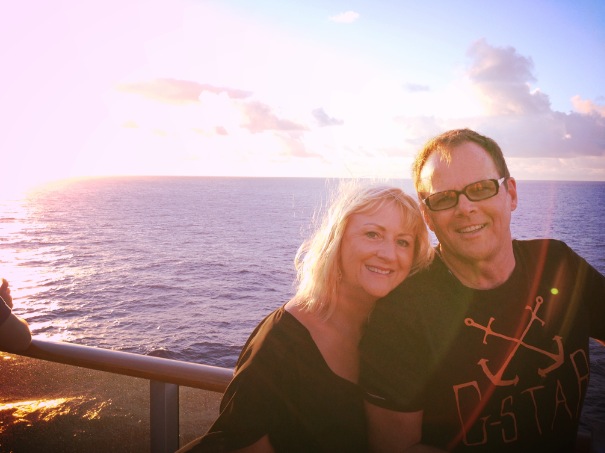
Easy not to complain when here with my beautiful wife and family last week.

What would a complaint-free day look like?

A monk joined a monastery and took a vow of silence.
After 10 years his superior called him and asked him, “do you have anything to say?”
The monk replied “food bad.”
After another 10 years the monk again had the opportunity to voice his thoughts.
He said, “bed hard.”
Another 10 years passed by and again he was called in before his superior.
When asked if he had anything to say, he said, “I quit.”
“It doesn’t surprise me a bit, you’ve done nothing but complain ever since you arrived.”

Would you be able to get through this day without complaining, either to yourself or to others?  What would a complaint free-day look like?

Complaining is an energy killer and it can be the catalyst for an unhappy day.  So, a complaint free-day would, at a minimum, be a happier day and a more energetic day.

Often the most difficult part of learning how to handle complaining is recognising it in yourself.  If someone recorded you for a week, what would it reveal about your speech?  How much time do you spend griping, grumbling, complaining, arguing, and saying “life stinks”?

Complaining is a habit.  Habits are only broken by replacement with something else. Take out the negative complaining and replace it with positive speaking.  Steve Penny, a good mate, says “happy people don’t have the best of everything, they make the best of everything”.  Happy people replace whinging altogether.

1 Thessalonians 5:18 says, “Give thanks in all circumstancesfor this is God’s will for you in Christ Jesus.”   You cannot always be thankfulfor the circumstances, but you can be thankful in them.  God has a good pattern and He fits even the bad things in our lives into that pattern for good.

There are some things in your marriage that you don’t like, things in your business, habits in yourself, your spouse, your children, or your boss. But I believe there are also some things in those situations and people that you could learn to be thankful for. Consider writing down one thing to be thankful for in your boss, spouse, children, teacher.

There are challenges we all face, but the way you look at your challenges determines your attitude.   Look for God’s fingerprint in your circumstances.  Because God is working all things out for good in your life, the good that you’re going to get out of whatever you’re going through will be much more long lasting than the problem.

For those of you who are going through real challenges today, I’m not saying ignore them.  What I’m saying is that in the midst of great challenge, living complaint-free can give you the necessary energy you need to make itthrough and strengthen your ability to fight.

Could today be your day to give complaint-free a go?

Phil

Defeating discouragement

What is it that causes you to worry?
‘Worry’ comes from an anglo-saxon word, “to strangle” or “to choke.”   As the origin of the word suggests, worry can get a strangle hold on us, and literally cut off the air supply that allows us to breathe emotionally.
Worry keeps us from living our lives to the full.  Fatigue is a major cause of discouragement.  Frustration and fear are others.  Where there is fatigue, frustration, and fear, discouragement is not far behind.
Dr. Walter Cavert conducted a study of the things we worry about.  The study showed we spend:
– 92% of our emotional energy over things that won’t happen or things we can’t change;
– 40% of the things we worry about never happen;
 ​- 30% of our worries concern the past;
​​- 12% of our worries are needless worries about our health; and
– ​​10% of our worries are insignificant (things that will not make much of a difference in our lives).
That alone is enough reason not to waste emotional energy on worrying.
Also, consider the effect your worry has on others.  People can become discouraged because you are discouraged.  You can become discouraged because other people are discouraged.
Its contagious!
What can we do about discouragement?
In order to overcome discouragement, we must remember God.   Isaiah 51:12-13 says, “He that is afraid of a man that shall die forgets the Lord his Maker.”
Remember first that God is there! 
We can be very discouraged when we think we are all alone in the situation, so know God is with you.  He is there whether you realise it or not, but it helps to realise it.
Matthew 6:34 says, “Give your entire attention to what God is doing right now, and don’t get worked up about what may or may not happen tomorrow. God will help you deal with whatever hard things come up when the time comes.”
Notice this verse doesn’t say, you will never go through hard times, it says don’t worry in advance about what may or may not happen because God’s help will arrive.
Another way to deal with discouragement, knowing its contagious, is to spend time with people who encourage not discourage. 
The best people to hang around are those who leave you feeling a little more courageous, because they put courage in.
And finally, relinquish control. Worry can be an egotistical habit. Worry is the idea that if we were in control of everything, all would be well.
Philipians. 4:6  says, “Be anxious for nothing, but in everything by prayer and supplication, with thanksgiving, let your requests be made known to God.”
Having trust in the God is the polar opposite of worry.  Practice focusing on your ability to trust God. I know it’s easier said than done…that’s why I used the word “practice.”
Practice living free from discouragement today!
Phil

MND: Pray for a Cure

Walking with great mates to help raise awareness and funds for MND research.

Earlier this month, over 700 people walked the outskirts of Lake Macquarie to raise awareness of MND and help raise finances to find a cure.  The cure may be closer than we realise with the below article published Friday in the Proceedings of the National Academy of Sciences USA.

Your continued prayers that a cure be found sooner rather than later for the 1,800 people suffering with this disease in Australia, and many more around the world, would be much appreciated.

We do not give up hope.
Phil

Friday, February 21, 2014

Culprit protein in spread of motor neuron disease discovered

A breakthrough study has revealed how the fatal neurodegenerative disorder motor neurone disease (MND) is transmitted between nerve cells, and suggests the spread of the disease could be halted.

“The agent of spread has been discovered,” says Dr Bradley Turner, of the Florey Institute of Neuroscience and Mental Health.

Motor neurone disease is the name given to a group of diseases in which the nerve cells (neurones) controlling the muscles that enable us to move, speak, breathe and swallow undergo degeneration and die.

Typically, MND starts in a finger or a toe and then spreads. Gradually, it is transmitted throughout the nervous system causing paralysis and death – usually within 27 months. MND affects around 300,000 people worldwide and two Australians die from the disease every day.

“By understanding how the disease spreads in the brain, we can develop new strategies to combat the progressive symptoms seen in MND,” Dr Turner says.

The research shows that a misfolded protein can spread throughout the nervous system. The culprit protein is known as SOD1. The misshapen SOD1 spreads inside a living cell, from one neurone to another, like an infection. Importantly, the study reveals that “wild-type” or normal SOD1 can misfold and transmit between cells, which has implications for the common sporadic form of MND.

Published today in the Proceedings of the National Academy of Sciences USA, the study also shows the spread can be neutralised using antibodies. Antibodies bind to regions of misshapen SOD1, and block its spread. If SOD1 misfolding is the common culprit in MND, as the study suggests, then the antibodies could arrest MND progression, the researchers say.

No human clinical trials have taken place but studies in mice have been successful in blocking the misfolded SOD1 using antibodies and slowing MND symptoms.

The research could also have implications for those studying other neurological disorders  including Alzheimer’s and Parkinson’s diseases where spread of misfolded proteins is implicated. These diseases may resemble the most common human form of prion disease, Creutzfeldt-Jakob disease (CJD).

This discovery is the culmination of several years of work by an international team involving Dr Turner at the Florey, Prof Andrew Hill at the Bio21 Institute, University of Melbourne, Dr Justin Yerbury at the University of Wollongong and Prof. Neil Cashman at the University of British Columbia, Vancouver,

For media enquiries: Amanda Place at the Florey 0411 204 526

How to grow, not crumble, under the weight of criticism

What's your recovery time when it comes to criticism? This swing has copped its fair share of critics!
What’s your recovery time when it comes to criticism?
This swing has copped its fair share of critics!

A young boy complained to his father that most church hymns were boring and behind the times. His father put an end to his son’s complaints by saying, “if you think you can write better hymns, then why don’t you?”  Isaac Watts went to his room and wrote such hymns as, “When I Survey the Wondrous Cross.”

All of us have been criticised, or soon will be. Well, those of us doing anything anyway.  When someone starts with “don’t take this the wrong way” you can be on high alert that you are about to get criticised.

Criticism rightly faced becomes a means of personal growth, but wrongly faced causes us to become angry and defensive.  In fact, this can be true of all trials.

So how can we make criticism work for us and not against us?  How do we grow from it and not crumble under it?

We are going to have to remember who we are.  I find my identity in the fact that nothing can separate me from God’s love.  His love gives me intrinsic value and a sense of worth.  I know that through His strength, I can face anything.

We also need to respond with love.  Love is the greatest force on this earth and the best way to cope with criticism.   Love may not always change the situation but it can change you for the situation.  You may not always love the criticism but you can always love the critic. 

The best example of someone coping with criticism, with love, is Jesus.  To be nailed to the cross was the ultimate rejection and extreme criticism, yet his response was “God forgive them”.

On top of all that, we need to rate the criticism.  Ignoring it, or becoming upset by it, won’t ultimately help us.  If we can look beyond the critic, look beyond the emotion, and consider what is being said, we may actually learn something.  And that very something may just propel us forward in our destiny.

Whatever you do, don’t use one of my all-time favourite defences, “well, what would you know anyway?”  Trust me, it’s useless.  Imagine if Isaac Watts said that to his Dad.  Instead, hear the criticism and honestly weigh it up.

Finally, measure how long it takes from the point of reaction to the point of recovery.  Meaning, how long does it take you to recover from a challenge, upset or criticism?

The Winter Olympics is on right now and those athletes have trained against their personal best for years to make sure they were getting better and faster.  Time was their guage for success.

So if last year it took you days to get from being hurt to forgiving, from offending to saying sorry, from being blessed to giving thanks, but this year it only takes you hours, then you’ve probably grown against your personal best.  In this way, time can also be your guage for success.

Do “getting criticised” well.  You’ll be blessed by it.

Phil

The Secret to Happiness

Single, Married, Sick, Healthy, Rich, Poor?  Discover the Secret to Happiness.
Single, Married, Sick, Healthy, Rich, Poor? Discover the Secret to Happiness.

Last week I was telling my psychologist how frustrating the changes in my body are. The simple things, like I have to wait for one of my sons to come over to carry salt to the swimming pool.

She said, “change will happen, sometimes we must learn to live with change being the new normal”.

What is the secret to a happy and content life?  I think it is learning to be content in whatever situation you find yourself in: single, married, sick, healthy, rich, or poor.  It’s a contentment that comes from within.

Philippians 4:12 says “I have learned the secret of being content in any and every situation.”

Contentment is not conning yourself, psyching yourself up, or pretending you like what you really don’t like. That isn’t contentment — that’s fake.

Contentment is taking stock of your attitude and deciding that with Christ’s presence in you, you can cope! You can handle it! You are sufficient for the problem!

Contentment is not apathy, laziness, or complacency.  If you can change a situation, you don’t need to be content and lay in it — maybe you need to get up and do something about it.

Where you really need to master the art of a learned contentment is in the situations that you can’t control: those things that are beyond you.

So how do you do that?  I have learned a couple of ways:

One is to avoid comparison.

There will always be people that make more money than you, who have greater opportunities than you have, or who have fewer problems. So what? That need not have any bearing on your own personal contentment.

Howard Hughes, a business magnate and Hollywood socialite, was once asked, “How much money does it take to make a man happy?” He said, “Just a little more.”

In stark contrast, the Apostle Paul says in 2 Corinthians 4:18, “We don’t look around at what we see right now, the troubles all around us. But we look forward to the joys in heaven.”

You don’t need to have what others have, be liked by everyone or have more than what you have now to be content.

I can’t afford to spend time comparing myself to other people or in the futile pursuit of more.   I keep my eyes on a far greater hope and purpose.

Another is to adjust to change.

Life is full of ups and downs — emotionally, physically, mentally, and financially. One thing is certain in life: change.

Change is going to happen whether you like it or not and we must be flexible because circumstances usually aren’t.

How well do you handle change?  Do you get frightened? Moody? Angry? Uptight?

Your happiness in life will be largely dependant upon your ability to adapt, adjust, and be flexible.

What is the secret of a content and happy life? Learn to relax, trust God, avoid comparing yourself and adjust to change.

Phil

A few thoughts on poverty, grace and ultimate trust

Speaking with small business owners in Kinshasa, DR Congo

Most of my trips overseas have been to visit, and hopefully help, people who are suffering far worse conditions than those in my homeland of Australia.

The poverty I have seen in parts of the world like Kenya, Rwanda, Nigeria and DR Congo is extreme and can be crippling to families and communities.

To try and paint a picture of this poverty with statistics, according to the World Bank, the Gross National Income per capita in the DR Congo is $220 compared to $59,570 per capita in Australia.

However, in the midst of the massive challenge that is poverty, I have observed people who have chosen to have trust, hope, faith and love towards Jesus.  This heart attitude sets their life on the path of looking for answers, not giving in to the trial.

What has always struck me is that even in their suffering, they seem to understand that circumstances are not always a good measure of God’s goodness.

God is still good.

They have taught me that, even when it is difficult to see or understand any reason, true love for Jesus is manifest in deep trust in times of trial.

God is still in control. 

I believe the reason for this unique life-giving perspective is that they are courageously lifting the word of God and the name of Jesus above their circumstances.  They are choosing to graciously respond and not react to daily struggles.   They respond with the grace that God provides daily and daily respond to God’s grace!

If you’re facing your own challenges: sickness, addiction, relationship breakdown or whatever it may be,  it is not just about whether you can believe God to fix that problem, but do you believe in the goodness, love and grace of God regardless of what you face?

The only way I know how to do this, while waiting for God’s provision, is to live with the presence of the Holy Spirit at work in my life.  It is what causes me to say, “His grace is sufficient for me.”  This is not by your own might, will, or power but by God’s Spirit, the great comforter.

God is still with you.

Psalm 136 says over and over again that “God’s mercy endures forever.”  Some translations say “His love endures forever” or “His kindness endures forever”.  The word “endures” tells us something: to endure implies that there will be tribulation, trial or persecution to overcome or to outlast.   It also tells us that God’s love, mercy, and kindness never quits!

Have you ever wanted to quit?  I’m sure you have, as I have at times, however strength is found in the fact that Jesus will never quit on you.

God is still for you.

Can I encourage you to do a heart check today – like my friends living in extreme poverty, is your heart open towards God, trusting his mercy, love and kindness, relying on and responding to Jesus’ grace that is all-sufficient?

Live in the slipstream of His grace today.

Phil

Heaven, healing and the in between

My neurologist just put me through my least favourite range of tests since being diagnosed with MND / ALS.

These electromyogram and nerve conduction tests are gruelling and painful.

They involve the signals to and from my muscles and brain being measured by using electric shock.

Other treatments, like the 3 hour immunoglobulin infusions I have once a month, are a breeze in comparison.

Light exercise to boost my happy endorphins, a drug for MND / ALS patients called “rilutek” said to increase life expectancy by 3-6 months, juicing for breakfast, and  a cocktail of about 40 vitamins I have self-prescribed through my own research have all become a regular part of my life.

Taking it deeper, daily I pray and believe for Jesus’ life, light and love to flow through my body, bringing life to my motor neurons.

I read my Bible and meditate on God’s word and His presence in my life, bringing my mind into a place of peace, not worry.

Why do I do all this stuff? 

Why do I fight this disease with medicines and subject my body to research? Why do I hang my hope on the life-giving power of God’s word?

It’s because I believe in the power of prayer and the word of God that brings life and transforms.

I also believe that God has blessed man with wisdom and knowledge to appropriate healing through medicine.

Is there a tension between me doing what I can and believing God for a miracle?

Yes, there is a tension and for the Christian living in a fallen world: there always will be.

I personally walk the line between doing what I can in the natural, and believing God to do what He can in the supernatural.

They are not mutually exclusive.

We don’t disqualify God from intervening in our situation by relying on man’s advancement in medicine.

I believe God is at work in a number of ways in sickness and health through:

  • the supernatural intervention of Gods miraculous power
    (e.g. defying doctor’s predictions and seeing a medical turnaround. like people healed from cancer);
  • the process of regeneration in our body that has been created by God
    (e.g. the body healing itself from scrapes and bruises);
  • medicines and medical advancements of our time, a gift of God’s wisdom and knowledge to man
    (e.g. antibiotics to treat an infection, or radiation to treat cancer); and
  • the comfort and wonder of one day entering heaven and eternity, a place God has prepared with no sickness or sorrow
    (e.g. death of our physical body causing us to pass from this life to the next).

All are expressions of God’s love, care and kindness towards a world that will continue to struggle against sickness and disease.

If you are sick today, I would encourage you to do whatever is available for you to do as provided by God through medical advancement and trust God to do what only He can do.

This will bring you great peace.

Phil

Me and one of the legends from our MND / ALS small group

Want more followers?

Want more followers?

The best leaders are those who know how to follow well.  In turn, they are supported by followers, who are leaders, who follow and so on and so forth.

Martin Luther King Jnr was a great leader because he courageously followed the dream in his heart, a dream of a better tomorrow for his children.

A byproduct of his courageous “follow-ship” was that many followed that same dream and that dream became a reality.

Jesus Christ, arguably the greatest leader in history, followed the leadership or will of His Father.  He also told others, “Follow me, and I will make you fishers of men” (Matthew 4:19).

Here, He is saying: Follow me, as I also follow my Father, and I will make you leaders (that is, people, who others will follow).

Whether you are following a leader, boss, or dream, or whether you desire to become a great leader, boss, or dream-caster: be encouraged to follow courageously.

What does the courageous follower look like?

Firstly, they are risk-takers.    We usually structure our lives to reduce risk to an acceptable level.  However, courage requires a willingness to consciously raise our level of risk to follow without reservation and wholeheartedly. If there is no risk, courage is not needed.

Nelson Mandela said, “I learned that courage was not the absence of fear, but the triumph over it.

Secondly, they are responsible.  Courageous followers discover or create opportunities to fulfil their potential and maximise their value to the team. They are not afraid to work hard to see their leader and team succeed.

Thirdly, they are willing to change.  Courageous followers see the need for transformation, whether in society, in organisations or in themselves.  They champion the need for change.

The sooner we get used to the idea of courageous followers supporting courageous leaders (who are courageous followers), the sooner we can change the world for the better.

I hope this has challenged you to be a courageous follower of others but also of dreams and visions bigger than yourself and your present reality.

I have a dream that one day there will be a cure for MND / ALS. For me to realise that dream I must courageously face the reality of this disease and be willing to take risks and be responsible so that awareness and finances can inspire research and breakthrough.

What is your dream or vision for your better future?

Ask yourself what steps of risk, transformation or responsibility are required to step out with courage today.

Phil

This is Newcastle Mayor Jeff McCloy and State MP NSW Tim Owen.  Leaders who are courageously bringing change to Newcastle city.  Passionate locals are joining in to make their dream a reality.
This is Newcastle Mayor Jeff McCloy and State MP NSW Tim Owen. Leaders who are courageously bringing change to Newcastle city. Passionate locals are joining in to make their dream a reality.

Blog at WordPress.com.

Up ↑