Search

Fridays with Phil

Life, family and unshakeable faith

Tag

#PhilCamden

Where’s my healing?


Sometimes I sound more together than I really am.  There are days it takes all my grit to keep living with hope and not default to focussing on my own pain, whinging all the while, or trying to escape it even just for a moment.

I don’t want to die and I don’t want to miss out on a thing.

That said, I am well aware that my pain could be another’s gain. I wonder in your life if your pain could become someone else’s gain.

We can choose to try and run from our pain or we can choose to embrace it and take the view that even in our suffering, maybe others can benefit.

This week at the Australian Open tennis, a commercial was aired [via http://www.curemnd.org.au].  It starred tennis players bringing awareness to the MND/ALS disease and the need to find a cure.  I love that!

Some say that MND is incurable but it’s not, we just haven’t found the cure yet.

I know it’s easy to fall into the trap of thinking of ourselves when we go through difficult times, but if we can move beyond that, the potential to help others is enormous. 

For me, that looks like doing whatever I can do to not only seek my own healing, and not only dwell on my prognosis, but also, to wholeheartedly support the quest to find a cure.

It’s not unique but it can be hard.  I see people all over the world deliberately putting the needs and safety of others before themselves even when I’m sure they have their own issues to deal with.

Most people with MND today realise that the cure may not come in their lifetime but what they do today could indeed save the lives of thousands tomorrow.

Like many diseases that were once incurable, a cure starts with awareness, that brings funding, that provides research.  And dare I say it:  our attention depends on the number of people the disease kills and who those people are.

So yes, while there are days I wonder “where is my healing?” I am more likely thinking about how good a cure would be.

I don’t think the discovery of a cure is any less a miracle and gift from God than what can and does take place in an individual’s life.

When I see doctors in third world countries operating on the blind through removing cataracts, it’s a cure but it is also a miracle for the person who can see again.

When I witness children who are infected with H.I.V. surviving through medicine, it is miraculous.

I get excited when through medicine, counselling, surgery, and science, things that were once impossible become possible.  It blesses me to see mankind trusting God to show them His mind on things and where disease once stole life, now millions can experience wholeness.

Just this week I read that according to The Lancet, in Australia 86 per cent of people with breast cancer are still alive five years after diagnosis.  This is thanks to more funding allowing for more research and early detection.

In our waiting and in our suffering, let’s always remember that there is someone else we could help, there is a cause we could further, a hand we could lend.

Waiting with you,
Phil

 

The stupid things I’ve said

When I was diagnosed with Motor Neurone Disease (MND), I noticed that people didn’t know what to say and even close friends struggled to communicate with me.

I know how they feel, as I have been there myself, wanting to offer words of comfort to others but not knowing what to say.

So here are a few things my experience has taught me that may help you communicate with those who are struggling. It may be a terminal illness like me, or it may be a dream not yet realised, a broken relationship, or a dead-end.

A classic comfort we offer others is to compare their situation to those who are seemingly worse-off. For example, some have said to me, “well you could have been hit by a car and already be dead”. I get the premise, but in reality, this has offered no comfort.

I have heard of others who have lost a child or spouse and were told they should at least be thankful for the short time they had together. This is something only they have the right to say. When you feel like your world has just ended, there are better things that could be said.

Comparing to a “worse” event brings little comfort.

Another classic: “there must be a reason for this because everything happens for a reason”.

The problem with this is often it is impossible to figure out a reason why someone is experiencing a tragedy that has derailed their hopes and dreams and impacted their family and finances.

Whatever you do, don’t suggest that the reason is that it could be God testing them. This is hard for me to fathom. The God I love and know would not and does not reward those He loves with life’s harshest conditions, like poverty or a terminal illness.

Yes, maybe in the midst of the challenge we can give what is happening to us some meaning but that’s a very personal thing that no one else can assume on the sufferer.

My hope is that anyone who is suffering would ultimately be able to give what they are going through a sense of cause and purpose, as I have experienced, even while going through the valley.

In the same vein, to those searching for something to ground tragedy in, I have heard it said or inferred, “maybe its because of something you have done.”

This old chestnut suggests that bad things happen to those who have done something to deserve it.

I’m sure we can all recall areas of our life that are far from perfect so when tragedy does come, it’s not hard to blame yourself or think that maybe somehow you deserve it.  I’ve been there, and I recommend getting out quick because it’s a dead-end.

Christ came to bring grace, He stood in the gap, and where we deserved death for our sin, He offers life.

Sure, there are consequences for all our actions: we’ve all heard it said, the smoker increases their risk of getting cancer, and the overeater increases their chances of getting heart disease.  However, we should never think that an undeserved or tragic circumstance in life is some sort of divine punishment.

The good news of the Gospel is that God is a God of grace not of karma.

They are a few things I won’t be saying, now, these are some great things I have experienced:

  • I’m washing my car this weekend and I’m coming to wash yours as well!” – Be specific when offering to help.
  • Boy you look so tired today, are you ok?” – Be real, don’t lie.
  • I’m coming over to mow your lawn, no need to come out, just wanted you not to worry when you hear the mower?” – Show kindness, expect nothing in return.
  • Hey, I know this is serious and you could die but I’m in this battle with you.” – Acknowledge how bad it is but give your support.
  • I’m so sorry” – Acknowledging loss can be as simple as that.
  • “I love you”, “Thank you”, “I appreciate you”, “I am praying for you” – Waste no time saying the things that matter.

So when we don’t know what to say, let’s err on the side of just being there, and putting ourselves in the shoes of the sufferer before we speak. This is love.

Phil

A simple thank you

I have discovered something about thankfulness, and it’s this:  the more thankful I am, the more thoughtful I am.

For many of us, our default isn’t to think about how our life affects others, how our words lift or wound, how our actions impact our “neighbour”.

But we’re meant to, it’s how we are created to thrive.  We are at our best when we love others as we love ourselves.

So how does thankfulness make me more thoughtful?

In my life, I have noticed that each time I thank God for being able to walk, I am drawn to pray for those who for the first time will be placed in a wheelchair and never be able to walk unassisted again.

When I thank God for my meal, it triggers thoughts of those that have no food, or those who require a feeding tube and don’t get to taste different flavours.

Thankfulness is a tremendous trigger for praying for others.  It’s a springboard that launches me beyond my selfishness and towards empathy – to care, offer a kind word, or do a good deed.

The Apostle Paul gets it, he writes in Philippians 1:3-4, “Every time you cross my mind, I break out in exclamations of thanks to God. Each exclamation is a trigger to prayer. I find myself praying for you with a glad heart.”

Amazing.  Perhaps at the root of selfishness is an ungrateful heart.  Perhaps a disregard for what we have breeds contempt and dissatisfaction with this very day God has graced us with.

When we are not thankful, we are not fully aware of what we have and we become unaware of the needs of others.

Thankfulness and gratitude develop thoughtfulness and compassion for others as we appreciate what we have.

I visited a man this week who had a teaching/research position at Macquarie University for 6 years, 20 years at the University of New South Wales, and 4 years at the University of Newcastle.  A Senior Lecturer on Earth Science, he travelled the world climbing and studying volcanoes.  He was married in 2013 with no diagnosis of MND.   Today he cannot move his legs or arms, confined to a wheelchair and is only barely able to talk, quickly losing this gift as well.

As I thank God for the slow progression of the disease within my own body, I cannot help but be thoughtful about those who are suffering much worse.

When you thank God for what you have in life, it triggers a prayer for those who don’t have and that in turn causes compassion to rise up, insisting we do something about other’s needs.

Why don’t you try thanking God for what you have and see where it leads in praying for others?

When thanking God for your marriage, it may lead to you pray for your spouse.

When thanking God for your children, it may lead you to pray for their future.

When thanking God for freedom, it may inspire prayer for those who are in prison simply because of their faith.

When we are unaware of what we have, we are also unaware of what others don’t have.

I’m not thankful for MND in my body but I try to be thankful in the midst of my MND.  Sure there are moments when I grieve what I can no longer do, but I try to keep them to moments and short ones at that, whilst focusing on what I do have and can do.

What are you thankful for today and where will it lead you…to thoughtfulness?

Phil

P.s. This year’s “Walk-to-defeat-MND” will be held on February 15th.  I would usually start my own page to raise money for this initiative, however this year I am asking those who would like to, to donate as part of “Phil’s Team” to these guys: https://give.everydayhero.com/au/paddle4mnd

8 of Lake Macquarie’s professional beach lifeguards are setting out to challenge themselves on a 130km board paddle from their own Blacksmiths Beach to Sydney’s Bondi Beach. 100% of the money they raise will be going straight to the MND research and awareness. 

The 8 Lifeguards that will be paddling are Lucas Samways, Danny Napper, Rory Chapman, Luca Chapman, Rory Tanner, Sam Earp, Jake Ingle, and Troy Ham… legends!!

Know it all?

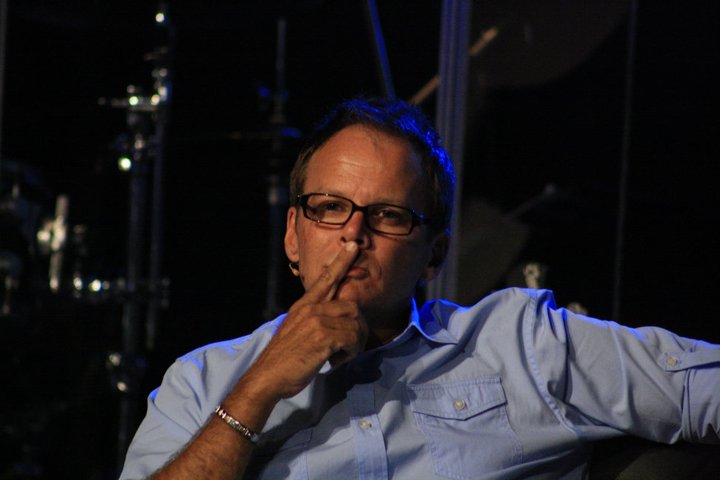
163864_135323826530410_2342770_n (3)

Knowledge is a wonderful thing but the right response to knowledge is a better thing: wisdom.

I would say that most of my mistakes have happened, not through lack of knowledge, but how I used the information I had.

For example, when I was managing Kmart in Blacktown many years ago, I was chasing a man who stole goods from the store.  I knew he had run up the stairs of the car park and so I followed him.  When I approached him, he grabbed me and tried to throw me over the edge of the three storey car park. Fortunately others saw and pulled him off.  I knew where he had gone but I was foolish in my response to this knowledge.

Our response to knowledge is the difference between wisdom and foolishness.

What knowledge or truth do you have today that requires you to act and respond well?

You may know that someone loves you deeply but your response to that love is to take advantage of it, to continually test it and manipulate it for your own end.  That is foolishness.

Without right response, knowledge is a dead-end.

Even the Apostle Paul in talking about how God is kind and merciful (i.e. knowledge) says, just because He is, doesn’t mean we should act as fools and test him (i.e. response). Romans 6:1-2 says, “What shall we say then? Shall we continue in sin that grace may abound? Certainly not!…

I have many friends with MND (also known as ALS) who all have the same knowledge about this disease available to them but their responses have varied.

For example one of the symptoms of MND is losing the ability to swallow and therefore being eventually unable to eat food.  The answer to this from a medical platform is to have a PEG attached to your stomach so that you can get food directly to your stomach via a tube.  The problem is you need to get this attached months or even years before you need it or your body is too weak to have it attached.

I have seen people say “no” to the tube for many months then change their mind and say “yes” only to be told its too late.  They responded, but the timing wasn’t right.

It challenges me on how important the right response to knowledge really is, it could even be the difference between life and death.

In your life, it could mean saying “no” to something you have said “yes” to, or it could be saying “yes” but at a different time.

Procrastination is usually loud.  Doing nothing is often talkative.

Whereas, wisdom is active, it is sure and it is often quiet.

I like this quote: “We can be knowledgeable with other men’s knowledge, but we cannot be wise with other men’s wisdom”  ~Michel de Montaigne.

I believe wisdom is ours for the taking if we master our response to knowledge.

Phil

Enough is enough

If you’re anything like me, you probably came to the point over the course of Christmas day where you had had “enough.”   Even if you were offered one more slice of meat, one more chocolate, or one more drink, you couldn’t do it.

When you have had “enough”, it can be a very satisfied feeling, there’s a fullness to it.

I encourage you, even just for a day, contemplate the fact that you are enough.

Enough change has taken place this year, enough growth and stretching, enough personal bests, enough reaching above and beyond where you have ever been before, and enough striving.

Be satisfied in you.

New Year’s resolutions can wait, what you may be or could become in the future will have their time.

Take a moment or two to rest in all you’ve done and all you’ve become, and who you are right now because you are “enough”! You are lovable, loving, kind and generous, trustworthy, and unique in your own skin.

Psalm 4:6-8 says, “Why is everyone hungry for more? “More, more,” they say. “More, more.”  I have God’s more-than-enough, more joy in one ordinary day than they get in all their shopping sprees.  At day’s end I’m ready for sound sleep, for you, God, have put my life back together.”

Even beyond today, consider the fact that God can use whatever state you are in right now to outwork His purposes.

You may think you need to be more for God to use you but God specialises in the “enough”.

Look at the boy in the Bible with the two fish and five loaves. Everybody else thought it wasn’t enough to feed thousands of people, but it was.  We read in Mark 6 that Jesus took that offering, looked up to heaven and blessed it.

God takes our “enough”, blesses it, and causes the miraculous to happen.

When we come to the place of realising that we are enough, offer ourselves to God to be a blessing, He takes who we are and uses it for good.  You are His “enough” right now and it is amazing what God can do with your “enough”.

So, enough from me 🙂  Go and enjoy being you, just the way you are!

Phil

You can’t handle the truth!

How do you handle the truth? Have you stopped to think about how you receive it and how you communicate it?

As important and beneficial as truth is to our relationships and society, like anything good, if used in the wrong way, it can be abused.

We all have a responsibility to know when and who to deliver the truth to or whether to deliver it at all. Learn when to speak it and when to keep it.

While it’s important for us to always tell the truth (be honest); it’s not always important to share the truth (spread it).

You see, truth needs to be delivered to the right people at the right time for the right purpose.

Truth shared with the wrong people at the wrong time or for the wrong purpose is often hugely damaging, and worse still, cheap gossip.

A sure sign that someone can’t handle the truth, is if they share what is said in confidence. Sharing truth with the wrong people is indicative of ambitious drive, a need for power or an unhealthy fascination with the tantalising.

Another sign someone can’t handle the truth is if they excuse hurtful or demeaning remarks with a flippant, “well, it’s the truth!”

In a world where we can communicate so much to so many so easily, we need to be careful that even when speaking truth, we exercise wisdom, integrity and love.

You want the truth? How do you handle it?

As in all things difficult to navigate, the Bible gives us some clear guidance.

In Matthew 5:21-26, Jesus encourages us that if we have an issue with a friend, we should go and make it right with that person.  He explains that words are powerful and have consequences.

I have found a good principle of thumb is that truth should be shared with the people immediately affected and someone who can do something about it: go upwards, not sidewards.

If someone offers to tell me something in confidence, I will often say, “You can tell me but depending on what you are about to say will determine who I will share the information with.”   More often than not, I redirect their truth-telling to the appropriate person or authority.

Proverbs 3:3 says, “Let not mercy and truth forsake you; Bind them around your neck, Write them on the tablet of your heart…”

We see here another principle found in the Bible is that if you need to share truth with people, make sure the motive is not power or ambition but mercy and love. In love, we need to learn to deliver truth with grace or mercy.

And finally, Ecclesiastes 3:7 says, there is “…a right time to shut up and another to speak up…”

Many times the best thing you can do with truth is keep it to yourself.  Sometimes the truth needs to stop at me because to go any further is to continue the gossip train. Some truth is just none of my business.

My encouragement to you today is to be a safe place when it comes to truth. Be someone who CAN handle the truth!

Phil

Every six minutes

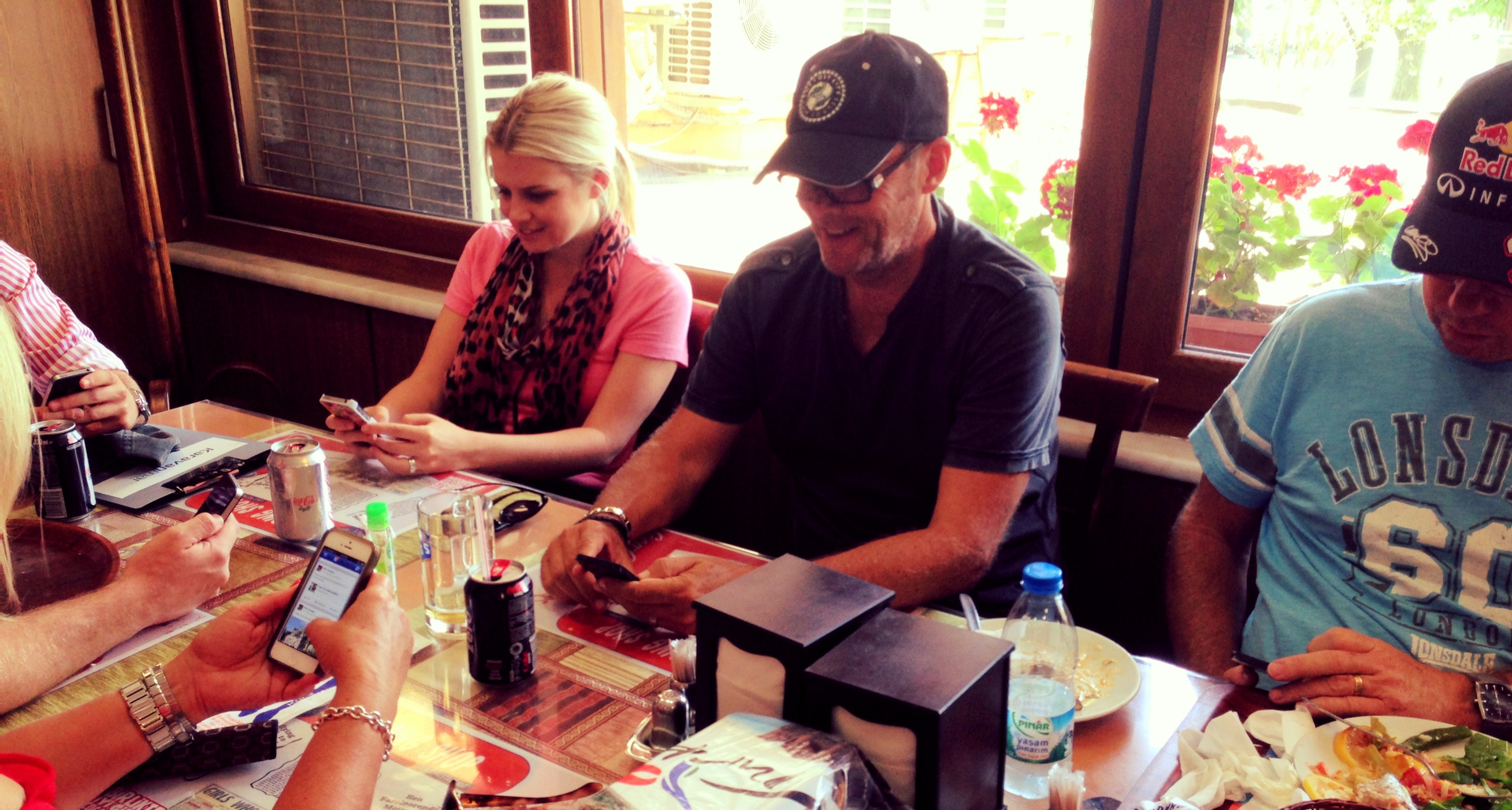
A little distracted  (Photo taken on a family trip in Istanbul, Turkey last year)
A little distracted
(Photo taken on a family trip in Istanbul, Turkey last year)

If you are what’s considered an average smartphone user then you check your phone 150 times per day. That’s every six and a half minutes.

We are wired, habitually and socially, to connect with others from all over the world at any moment in time through media forums like facebook, blogs and email. In fact, right now I am speaking to you through one of those.

I just wonder if this type of conversation, now normal, inhibits us connecting with others beyond surface level and with God in a deep way. Perhaps, we have discovered how to be partly tuned into everyone while becoming less connected or tuned into anyone.

We have all become experts in the act of multi-tasking, that is, doing lots of things at once, but how good are we at “uni-tasking”, doing one thing at once?

How do you go focussing on one thing or one person and keeping out all the other noise?

A good way to gauge this is to think of whether you allow your phone at the table when you sit down to a meal or if you allow alerts to interrupt quality time with family and friends. Maybe it’s time you put measures in place to try some uni-tasking.

While there’s no doubt that conversations with one another are important to connect us relationally, the way we converse with God is perhaps the most important conversation of them all. I know it is in my life.

My conversations with God are allowed to be raw and real as I expose my heart and feelings with Him. To talk with Him is to acknowledge His presence and power whilst revealing my need for Him and ultimately my trust in Him. It’s simply prayer.

If you’re not sure how to pray today, Jesus shows us one way to have a conversation with our Creator recorded in Matthew 6: 9-13 as “The Lord’s Prayer”. This prayer gives us a blueprint for one type of conversation we can have with God but it is not the only kind. The important thing is that you are communicating with God.

Prayer inspires my very real, present day, dependence on God’s grace. I depend on God for strength to rise above daily challenges, confrontations and tragedies.

I have found that I never leave these conversations without hope. If I invite Him to, somehow, God communicates to my spirit and soul things that encourage and strengthen me. It’s personal. It’s tangible.

If you’re a busy parent then don’t fret, you can talk to God while feeding or washing kids. A business person can talk to God in the middle of a board meeting or travelling to and from work. I have even spoken to God when signing important documents or while doctors are inflicting painful tests on my body.

Conversations with God can take place at anytime and anywhere.

I encourage you, in light of the number of conversations and frequency of conversations we are all engaged in, let’s not neglect the most important conversation of all.

Phil

The God I never knew

I wonder how many times God has intervened in my life without me realising it.

I am sure I live unaware of God’s provision, protection and help in my life.

Just as God asks us to do acts of kindness without the big fanfare of public recognition, God is always doing things on our behalf that He doesn’t let us in on. His kindness is at work constantly.

I think of the bible passage in Acts 9:1-5 which speaks about Paul on his way to arrest and execute Christians. The Bible says in verse 3, “As he journeyed he came near Damascus, and suddenly a light shone around him from heaven.”

While Paul was on his way to harm these people, he is instead arrested by Christ’s love and his life is changed.

My thoughts are towards the ones who didn’t know the danger they were in as Paul was on his way, and “near to them” to destroy them.   Because God intervened, they were saved from harm.

I also think of the Israelite people who suffered persecution from the Egyptians, described in the book of Exodus.

Even while they were suffering and praying for deliverance, God was working and preparing Moses as a child to be the answer to their prayers and they didn’t even know God was already at work.

I think of my life, still walking around with MND more than a year after doctors said I shouldn’t be able to. I think of the time in Zanzibar that my limbs cramped and my friend swam out to rescue me from drowning. I think of the time in Auckland when I came off my scooter, breaking my scapula and narrowly missing being run over by a truck– and I’m sure you have similar stories.

Maybe that’s why pride is so dangerous: it ignores the fact that God is working behind the scenes. It fails to give him credit for the less visible signs of His grace and goodness. It takes the wins on its own merit.

Even though I am proud of what I can see tangibly around me, I am convinced that I am also unaware of the extent of God’s grace that has helped me and caused me to succeed.

I may never know the number of times God has intervened and rescued me.

So once you are finished thanking God for those things in your life that you can see, remember to thank him for the things that you can’t. Be thankful for the unseen hand of God’s presence always making a way.

Never give up on trusting God to come through for you even when it seems too late. Trust His timing in all things. While there is hope, there is life. God is always working on your behalf for your good.

Phil

Blog at WordPress.com.

Up ↑