It will be my honour to be a member of the Australian MND Guidelines Panel over the next two years.
The University of Adelaide has been given a grant from FightMND to produce this national guidelines for the care of people living with MND.
Here is my speech that i gave at the launch.

Talk Title: “Anchoring Hope: The Power of Guidelines in the Maze of MND”
Good morning everyone,
My name is Phil Camden, and I was diagnosed with MND at the age of 54. Harvard University suggests that this is the optimal age when an individual discovers their sense of belonging in the world.
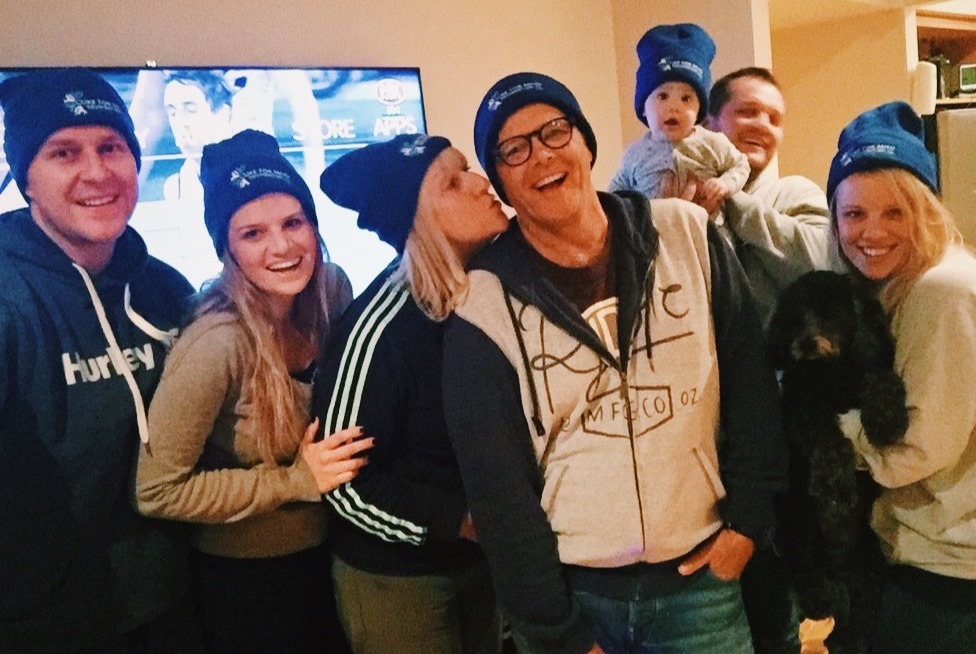
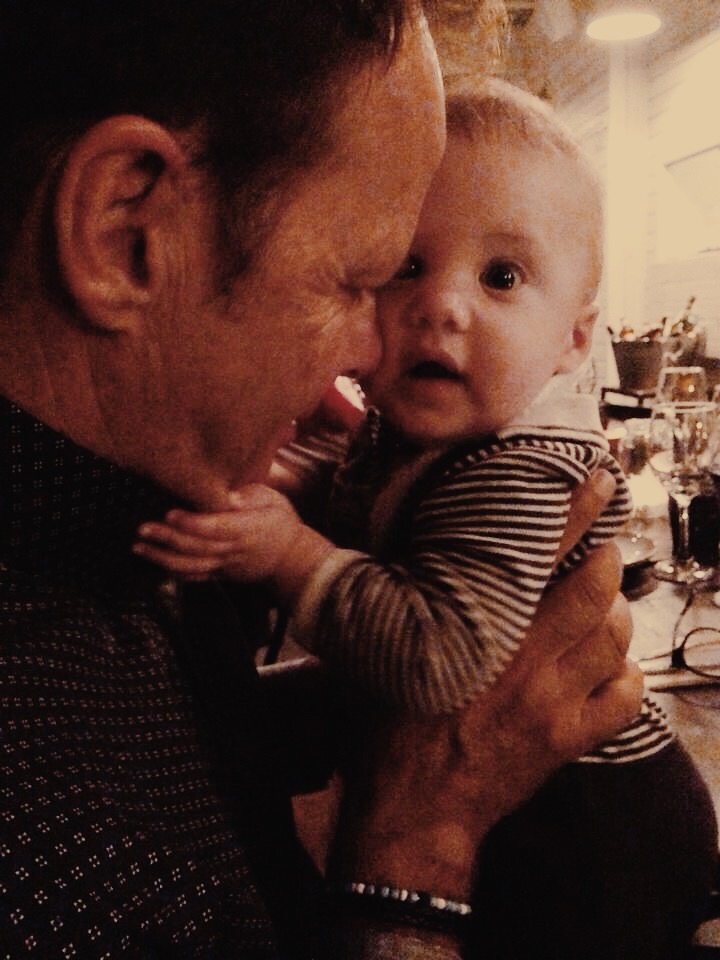
I’ve been married to Lenore since I was 19 years old. We have two married daughters and four grandchildren.


For someone receiving a diagnosis of MND, life can suddenly feel like you’ve been dropped into the middle of a maze—unfamiliar, overwhelming, and deeply disorient-ing.
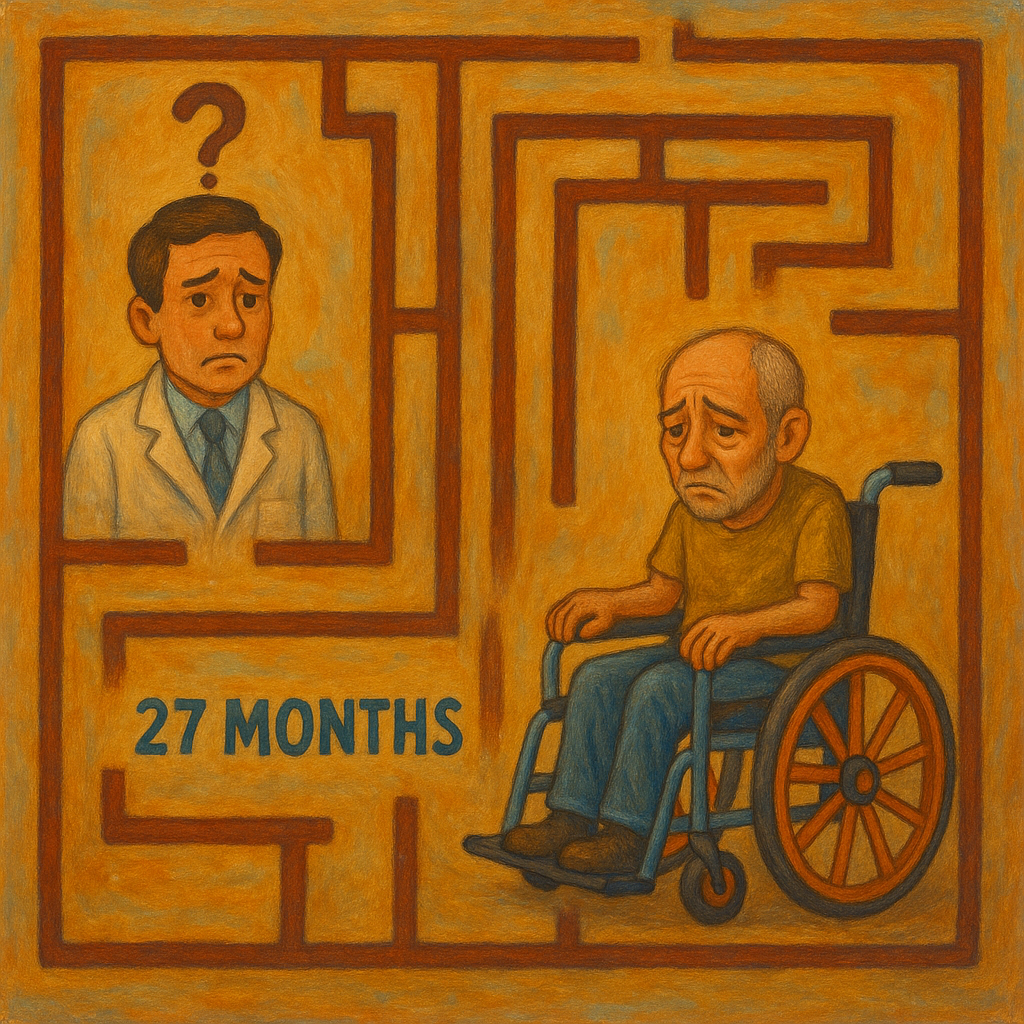
The thing is, we are not alone in the maze. We know that. But the others with us in the maze are equally as lost and confusedd. We bump into all kinds of people wanting to help . Some don’t even know the name of the maze until we utter the letters MND.
In the heart of this maze, where every turn leads to deeper confusion and the walls close in, there’s no room for chance or instinct—only the desperate need for direction. And that’s where you come in.
It’s not just the body that changes. Identity, relationships, and meaning are all challenged.
What you are doing in developing these guidelines is not just technical. It’s not just procedural. It is profoundly human.
Because in that maze, you are helping us place something like Waze—
Steve and I used WAZE a GPS to drive to Adelaide from Melbourne. It not only showed us the direction but warned us of potholes ahead, traffic congestion, accidents, and police, etc.
Guidelines provide a kind of WAZE a map that helps patients, families, and clinicians navigate an otherwise unpredictable path with confidence, dignity, direction, reassurance, and shared understanding.
And here’s what I want you to hear today:

We place our hope in your ability to produce this work—not just because of your knowledge, but because of your compassion.
Because guidelines, done well, don’t just coordinate care. They affirm identity. They say:
“You still matter. Your life still has meaning. You will not be forgotten or left to figure this out alone.”
You’re not just writing protocols. You’re anchoring people in a story that says:
“Even in the face of decline, you are still a person of worth, deserving of excellence, kindness, and consistency.”
Now let me take this even further.
When someone is diagnosed with MND, it’s like being a prisoner in the American Civil War shown a “deadline”—a literal line that, if crossed, meant death. For us, that line is often drawn at 27 months—the average life expectancy after diagnosis. It’s stark. It’s sobering. And it can feel like a sentence.
But these guidelines you are creating—they take the place of that “dead line.” They redraw the map. Instead of a line of despair, they offer a path of care.
They carry the potential not only to add days to life—but to add life to days.
Who knows how much longer someone with MND may live beyond that 27-month mark?
Let’s find out!

Because those living with MND don’t just need treatment—they need hope.
That hope is not passive —it’s expectant. It’s not just waiting patiently . It’s a confident, eager longing that says,
“There’s still more ahead. There’s still meaning to be found.”
This is the kind of hope people with MND live with every day—not just a hope for cure, but a hope that their care will be consistent, compassionate, and meaningful.
And we are the ones helping shape that hope into reality.
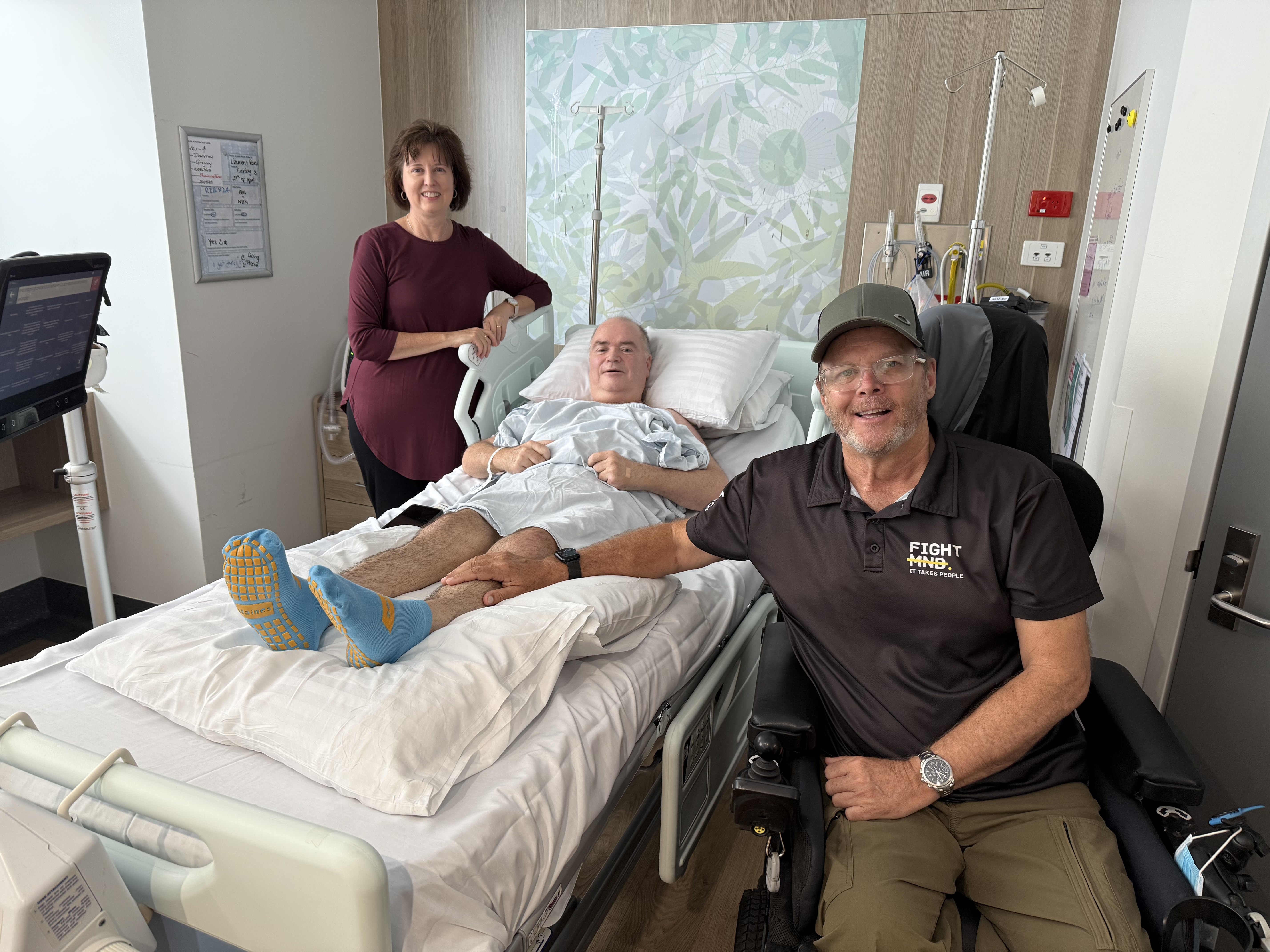
On Tuesday Steve and I visited a friend who also has MND, Greg is in palliative care and even now the nurse didn’t know how to use a Button PEG – feeding tube. She tried to pull it out and broke it.
Greg is unable to move his legs, arms and cannot speak he is using eye gaze.
He told us that the nurses gave him a buzzer to ring if he needed them but Greg couldn’t push the button. When he got cold and needed a blanket he had to text his wife at home, hoping she would get the text and ask her to ring the hospital and get the nurse to bring a blanket to his room.
So today, as we contribute to these guidelines, know this:
What we are doing matters. Profoundly matters.
You are helping people find their way—not just through systems, but through suffering.
And for that, we are deeply grateful.
Thank you.





 Fridays with Phil
Recent Comments