I had the privilege of being part of the MND Massive Open Online Course (MOOC). Anyone can take this course if you want to know more about MND/ALS. Here is the link for the course, which is free until the end of June. https://island.mooc.utas.edu.au/course/20279
Transcript:
You’re not alone. You know there’s an army out here and a family out here that are here to help. When you get diagnosed with a terminal illness. You have to reeducate yourself to be the one who is willing to receive help, which is very difficult.
One of the things that I would like to get across to the MND community is, we are human beings, not human doings. And your sense of self-worth and significance is not created by what you can do; it’s simply by being who you are. And when we lose the ability to do things around the house, that doesn’t mean that we are less significant or less important or less valued than the people who can still do things around our house. Your value is not in the things you do. Your value is in that you are a human being.
You know you have intrinsic value, and your presence alone, even if you can’t move, even if you can’t speak, even if you can’t hug your wife, even if you can’t hug your grandkids. Your value is your presence. You’re there, and that’s what people who love you will value. You know that they won’t care that you can’t feed yourself or you can’t feed them.
To those with motor neurone disease, please don’t see a body getting weaker of your sense of self-worth and significance to those that you love. You know you are more than your body: your body, mind, soul, and spirit.
Also, keep the hope as well. You know there are a lot of things happening that weren’t happening 10 years ago that are happening now, so please keep hopeful. Continue to hope. Who knows? Tomorrow might be the day someone goes, “ Eureka! We found something!” We just don’t know, and so keep hope alive.
It will be my honour to be a member of the Australian MND Guidelines Panel over the next two years.
The University of Adelaide has been given a grant from FightMND to produce this national guidelines for the care of people living with MND.
Here is my speech that i gave at the launch.
Talk Title: “Anchoring Hope: The Power of Guidelines in the Maze of MND”
Good morning everyone,
My name is Phil Camden, and I was diagnosed with MND at the age of 54. Harvard University suggests that this is the optimal age when an individual discovers their sense of belonging in the world.
I’ve been married to Lenore since I was 19 years old. We have two married daughters and four grandchildren.
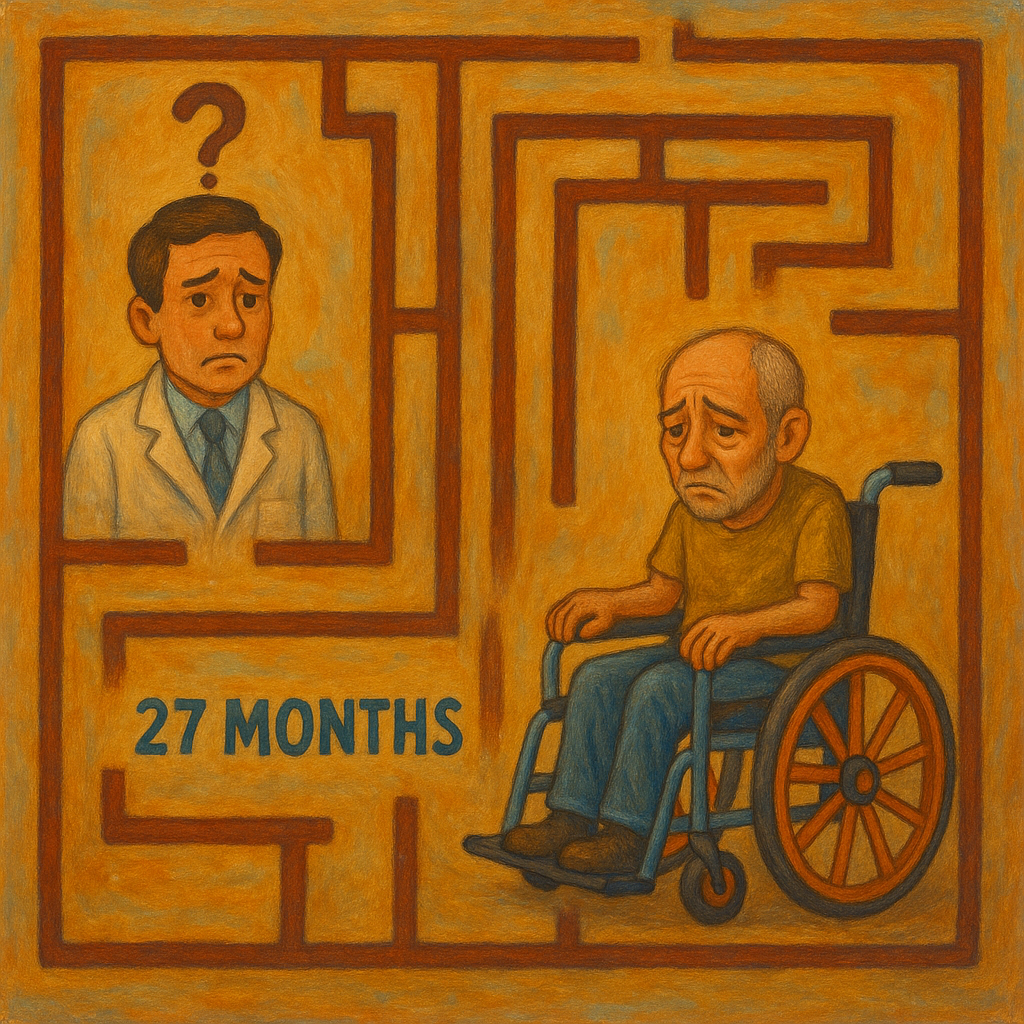
For someone receiving a diagnosis of MND, life can suddenly feel like you’ve been dropped into the middle of a maze—unfamiliar, overwhelming, and deeply disorient-ing.
The thing is, we are not alone in the maze. We know that. But the others with us in the maze are equally as lost and confusedd. We bump into all kinds of people wanting to help . Some don’t even know the name of the maze until we utter the letters MND.
In the heart of this maze, where every turn leads to deeper confusion and the walls close in, there’s no room for chance or instinct—only the desperate need for direction. And that’s where you come in.
It’s not just the body that changes. Identity, relationships, and meaning are all challenged.
What you are doing in developing these guidelines is not just technical. It’s not just procedural. It is profoundly human.
Because in that maze, you are helping us place something like Waze—
Steve and I used WAZE a GPS to drive to Adelaide from Melbourne. It not only showed us the direction but warned us of potholes ahead, traffic congestion, accidents, and police, etc.
Guidelines provide a kind of WAZE a map that helps patients, families, and clinicians navigate an otherwise unpredictable path with confidence, dignity, direction, reassurance, and shared understanding.
And here’s what I want you to hear today:
We place our hope in your ability to produce this work—not just because of your knowledge, but because of your compassion.
Because guidelines, done well, don’t just coordinate care. They affirm identity. They say:
“You still matter. Your life still has meaning. You will not be forgotten or left to figure this out alone.”
You’re not just writing protocols. You’re anchoring people in a story that says:
“Even in the face of decline, you are still a person of worth, deserving of excellence, kindness, and consistency.”
Now let me take this even further.
When someone is diagnosed with MND, it’s like being a prisoner in the American Civil War shown a “deadline”—a literal line that, if crossed, meant death. For us, that line is often drawn at 27 months—the average life expectancy after diagnosis. It’s stark. It’s sobering. And it can feel like a sentence.
But these guidelines you are creating—they take the place of that “dead line.” They redraw the map. Instead of a line of despair, they offer a path of care.
They carry the potential not only to add days to life—but to add life to days.
Who knows how much longer someone with MND may live beyond that 27-month mark?
Let’s find out!
Because those living with MND don’t just need treatment—they need hope.
That hope is not passive —it’s expectant. It’s not just waiting patiently . It’s a confident, eager longing that says,
“There’s still more ahead. There’s still meaning to be found.”
This is the kind of hope people with MND live with every day—not just a hope for cure, but a hope that their care will be consistent, compassionate, and meaningful.
And we are the ones helping shape that hope into reality.
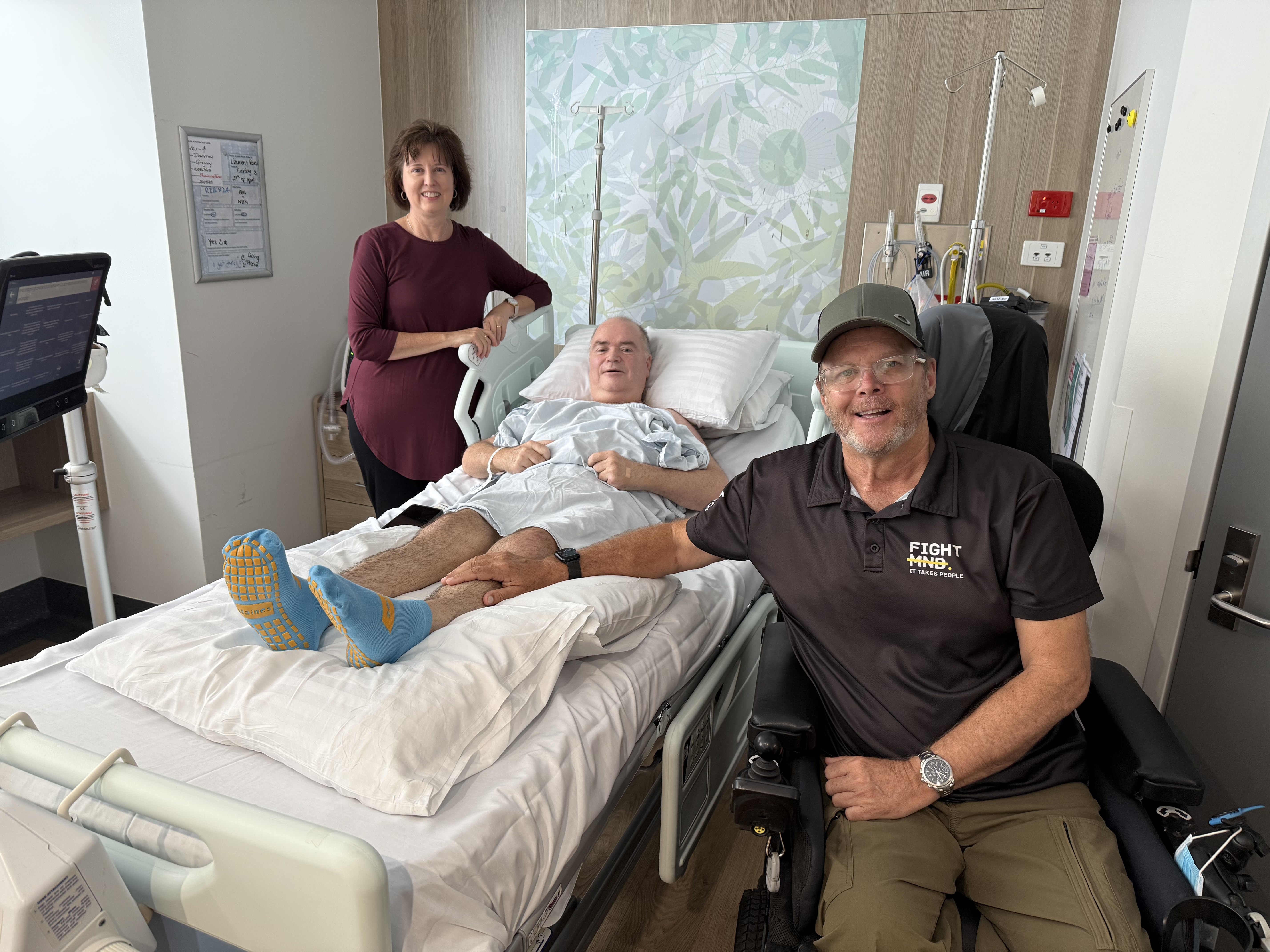
On Tuesday Steve and I visited a friend who also has MND, Greg is in palliative care and even now the nurse didn’t know how to use a Button PEG – feeding tube. She tried to pull it out and broke it.
Greg is unable to move his legs, arms and cannot speak he is using eye gaze.
He told us that the nurses gave him a buzzer to ring if he needed them but Greg couldn’t push the button. When he got cold and needed a blanket he had to text his wife at home, hoping she would get the text and ask her to ring the hospital and get the nurse to bring a blanket to his room.
So today, as we contribute to these guidelines, know this:
What we are doing matters. Profoundly matters.
You are helping people find their way—not just through systems, but through suffering.
If we love then we will not make it through life without experiencing grief.
Strategies for dealing with grief.
In my last vlog I said:
Life’s beauty is inseparable from it fragility.
The greatest beauty is found in love.
With love also comes great grief.
If we love then we will not make it through life without experiencing grief.
Living with arms and hearts that embrace life and love will also bring lose.
This loss can be in the form of the death of a loved one,
Being made redundant from your work place,
A diagnosis that threatens your life,
A business transaction that has been lost,
Lose of business that you have given your life to.
A pandemic that separates,isolates and devastates your security and well being.
BUT WHAT if I could show you a way to processing grief and loss that will lead to a greater depth of joy, a new perspective ON life and new purpose FOR life.
Some real keys to living with and through grief.
First: When we deal with our grief don’t look at it like its a spiralling downward as much as its a way we move forward through pain and challenge.It’s what Philippians calls the “forgetting what is behind and straining forward”.
Sometimes going forward means straining and grief is THAT.
JESUS lived for 33 years on this earth and he lived in a way that not one moment or experience he had was wasted or of no value to him or those who would know him.
In the Garden of Gethsemane we see him grieving again, weeping over his coming death and wanting the comfort of his friends with him.
In Matthew,: “My soul is sorrowful, even unto death; remain here and watch with me” (Matthew 26:38 ESV).
And, of course, lamenting to God is praying like Jesus did. Jesus prayed a psalm of lament on the cross, crying out “Father, why have you forsaken me?” (Matthew 27:46, Psalm 22:1 ESV).
Jesus grief was seen over the death of His friend Lazarus.
He loved and in His love for Jerusalem, for humanity, for you and I he experienced real grief.
His grief was not wasted neither is our grief.
You may not see any meaning that can be immediately attached to the grief you are going through but the way you go through your grief could in itself attach meaning to it.
This is a world full of brokenness, and grief reveals the truth about that brokenness.
I think this is a topic again so needed right now more then ever.
It’s a subject that again is
not negative but positive,
not destructive but building,
not disempowering but empowering,
not weak but strong,
not fearful but courageous.
If we lean into grief the way we should we will bring meaning and purpose to what may seem such meaningless circumstances.
Yes I believe when we see no obvious reason for loss and grief we have the grace and ability to bring meaning to it.
Can I first begin by saying sadness and grief though similar are not the same.
If we think of sadness its not depression and its not grief.
Sadness unlike depression and grief is shorter more temporary emotion we have in lose or disappointment.
When we see that 958 people died in England we are sad but for the loved ones of those who died they will experience deep grief.
Our sadness may only last for a few days or until the next commercial or news report of another tragedy or triumph.
Their grief will stay with themin some form or another for the rest of their lives.
When I was diagnosed with MND a terminal illness for those who loved me deeply it was a time of grief for others it was sad to hear about Phil.
And thats ok because none of us who love deeply will go through life without grief.
May I also say that grief can have many levels and layers too it.
If your mother was to die at the age of 98 from natural courses your grief will be real but for you to loss a child at a young age to cancer or some other illness or tragedy. May I suggest that grief would be a whole other level and depth so profound that it would impact your life story for ever.
Grief goes deeper, its life changing, its an experience that brings a changed life.
There is a before and an after this happened when it comes to a life impacted by grief.
Before this loss and after this loss!
For me it was I was healthy before i was not, with this MND.
I will continue to live, love and enjoy life but life will be different and so will I.
Even if I was healed today my life will never be the same as it was before the diagnosis.
Grief has the ability to make us more loving, patient, compassionate, accepting and gentle.
This will only happen if we face up to grief, truth up to it.
To do this with any sense of truth we have to know that with grief,
its ok not to be ok,
until you are ok,
and you will be OK.
When I lost my sense of self worth and significance after being diagnosed with MND and as a result having to leave a job I not only deeply loved but that I had been called to.
I loved being who I was and doing what I did so when I lost that ministry as i knew it then my grief was real and tangible.
Grief is not sinful.
It’sa good and godly response to love and passion lost.
Sometimes we repress grief and try to move through it quickly, or even deny that it is there.
We might fear that it is a sin to feel this way.
If we believe it is sin, it follows that we should move away from this negative feeling quickly.
We fear our grief may cause us to question the presence and work of God in our lives.
What I learned during this time is that it was not the end of me or my life but a continuance of it in ways i never imagined.
I would get up but I would be different.
It was going to be a straining, a stretching,a reaching but not a breaking.
What i suggest you do in your time of grief is be honest with your feelings and emotions.
Either write them down like no one will read them, so there is no filter by what you should say or be expected to say.
Lament to God as though he is the only one who hears and he knows anyway so your not going to shock Him.
Confide in a wise friend, pastor, counsellor, therapist who you can trust with the truth about how your feeling.
Lamenting to God is a good and holy way to grieve.
Listen to a Lament in Psalm 102:1-2
“GOD, listen! Listen to my prayer, listen to the pain in my cries. Don’t turn your back on me just when I need you so desperately. Pay attention! This is a cry for help! And hurry—this can’t wait!”
When you write or talk about your grief your showing up to it.
Life is lived when you move forward with your story not by separating yourself from it.
We become integrated and whole able to move forward in healthy ways.
This week and indeed the months ahead will bring with it sadness for some and grief for others.
If we are global christians we will not just see the blessing of living in Australia at this time but also feel the pain of what many others in our world are going through especially in 3rd world countries where the news seems to have no concern.
The way we move forward with these real emotions will determine the depth of love, joy and wonder that life is.
Without grief we would never really fathom the profoundness of love.
Grief is only possible because we have loved and love is ultimately measured by the depth of our grief.
Grief journeyed rightly, honestly and truthfully will bring new purpose, new direction, new perspective to life.
This new life wont come by ignoring the grief but facing it truthfully and fully until we are change for the better because of it.
So:
Write it down
Lament and pray to God.
Talk to a friend
Confide in a councillor.
Remember grief is a stretching, a straining but its a forward movement not a backward one.
You will be transformed by the experience as you face your grief with grace and truth.
You will find new perspective, new purpose, new love for life and living.
Thanks for listening.
If your on YouTube why not subscribe to my channel or





 Fridays with Phil
Recent Comments