Search

Fridays with Phil

Life, family and unshakeable faith

Category

Uncategorized

I believe we can Freeze MND!

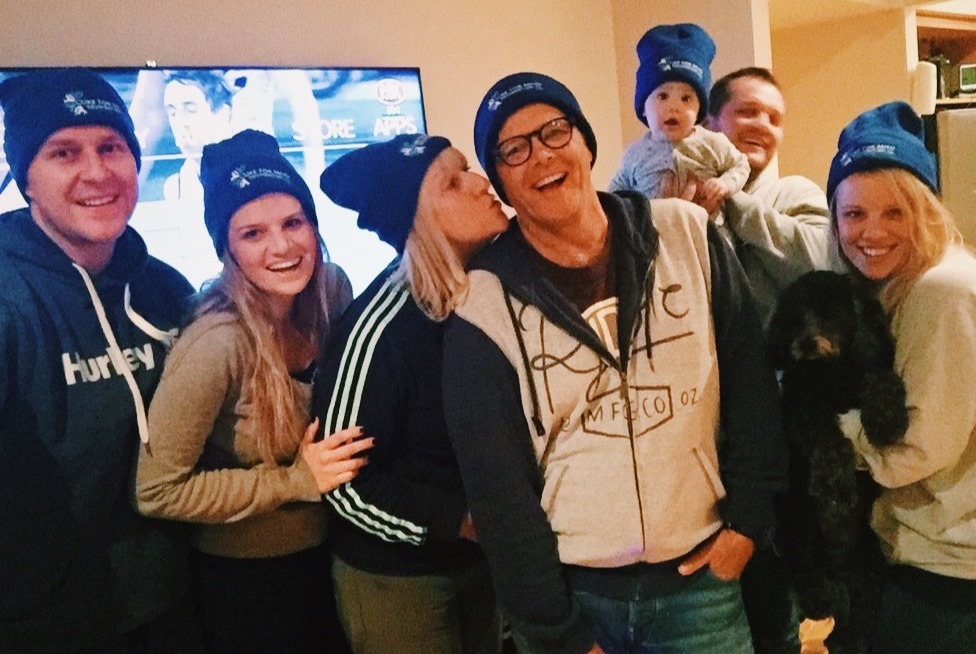
With my family, looking forward to the Big Freeze!

Like me, Neale Daniher has Motor Neurone Disease (MND), also known as Amyotrophic Lateral Sclerosis (ALS).

This weekend, Neale is spearheading a campaign to raise money for a cure.  On Monday June 8th, several well-known footy personalities will be dunked in a giant pool of ice before a blockbuster Collingwood FC vs Melbourne FC game at the Melbourne Cricket Ground.

MND in Australia alone kills 2-3 people each day and they are replaced daily with others being diagnosed.

Neale calls it the BEAST.  My neurologist, Professor Dominic Rowe, a leader in research for a cure at Macquarie University, calls it the BASTARD.  Doctors, in university exit surveys, are known for voting MND the disease they would LEAST like to get.

MND kills most of those with it within 27 months of diagnosis. Death comes by the muscles wasting away until the person can no longer walk, talk, eat, or move any part of their body but the eyes, and then eventually, they can’t breath.

There is a cure, we just haven’t found it yet!

Personally I’m believing a cure will be found in the not-too-distant future.  I think we can turn Motor Neurone Disease around.

Why is a cure so important?

I believe a cure is the best way we can honour those who have died of the disease before us.  They courageously and valiantly faced their death.  All those who have died from MND have somehow contributed to the cure of the future.  Their death has motivated many to desperately and tirelessly work to find a cure today.

I think of those who can now give testimony of having been cured from cancer and at the same time, I think of those who, because of their death, are the reason we can celebrate that cure today.

Another reason I believe a cure is so important is that it aligns itself with the heart of God for humanity, a good God who desires for us to live life abundantly.  Whenever anybody works to protect, provide and promote life, they work in line with the will and purpose of God for humanity.

I am throwing my full support behind Neale and his team to help raise as much awareness and funds as possible.  If you would like to find out more or lend your support, you can visit www.freezemnd.com.

Phil

Am I full of it?

Our car broke down on the way to the airport the other day.  I made my way home to get our second car.  Back on the road again, I realised I didn’t have my glasses.  We went back for them.  On the road again, I realised I didn’t have my phone.  We went back for it too.  Somehow, they still let us board our flight.  It’s funny now, but it was less funny at the time.

What did it teach me? Not only do I need to keep my car full of fuel, I also need to make sure the fuel gauge is working!  If it isn’t, and I am running on empty, I will have no way of knowing it.

We all need fuel for life and we all need to be able to read the gauges that reveal to us where our fuel levels are at.  We also need to know where we can get more fuel before we run out.

What are some of the fuel gauges when it comes to life?

Towards full, you will find yourself with humour, joy, stamina, wanting to be with friends, and being present in the moment.

Towards empty, you will become easily discouraged, physically exhausted, feeling stressed, eating patterns change, isolation is a friend, and patience is short.

Most people know themselves and can tell when something is not right.  By then, they are often in damage control.

The key is to refuel before you run out.

What does refuelling look like?  It can be different for each of us and depends on whether it is our body, soul or spirit requiring the top up!

I would suggest mixing things up: good eating habits, with great relationships, rest, and worship that energises your spirit.  Not only that, but refuel at different intervals in life: annually, monthly, weekly and daily.

I love the idea of refuelling annually, to take stock of where you are at and where you are headed.  It is like cleaning the fuel filter, flushing out the whole system and recalibrating the air fuel mixture for best performance.

Setting aside time completely away from your usual work environment, whether a holiday, a conference, or a “lock down” without outside interference, is well worth it!  For at least 25 years I have attended Hillsong Conference and it has been a great refuelling station in my life.

Monthly, endeavour to do something special that you can look forward to over that month.  Maybe it’s a road trip to a place you have never been or a game of golf with friends.  It’s amazing how much more energy you have when there is something to look forward to around the corner.

Consider activities that aren’t just enjoyable but those that are also beneficial.  For example, speak to your doctor about changing up your diet for a couple of days per month, cutting out or adding in certain foods for best health.  Or consider the benefits of making time to sit with a mentor or coach to focus on areas that help ensure a healthy soul – your mind, will and emotions.

Weekly, have a day off from the usual weekly activity.  A spiritual journey to Church is a great place to receive fuel for our soul, to fine tune the engine so we get better fuel economy for the week ahead.

Daily, get up and do something that you enjoy.  Take a walk, hit the gym, find a place you can sit and meditate.

Your life will be fuller if you make time for the things that will build and strengthen your body, soul and spirit.  So, happy refuelling!

Phil

When pain goes unseen

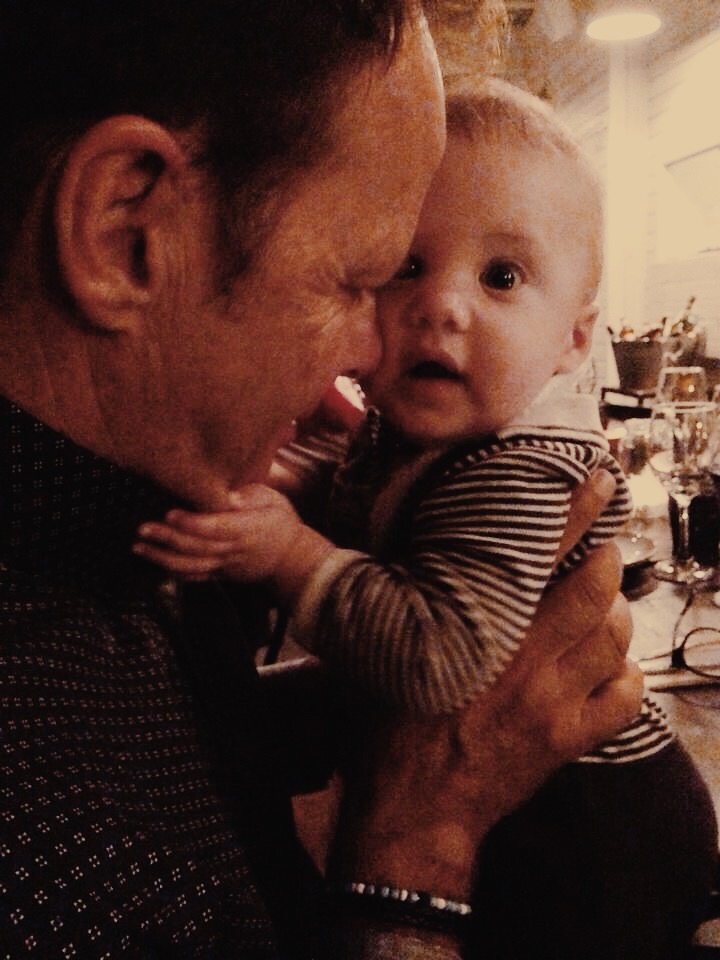
My grandson Lucas is now six months old.  Lucas is one of the happiest little babies I know.  He hardly ever cries and his smile is constant and infectious.  However, lately Lucas has been crying more and his mum tells me it’s from his teeth forming under the gums.  It’s not the pain from the teeth breaking through the skin but an unseen pain under the surface.

It made me think about the people we do life with who have learned not to cry but still carry unseen pain either physically or emotionally. On the surface they look good, they look together, but there is an unravelling on the inside, a deep pain that is real and relentless that others do not see.

Living with Motor Neurone Disease, and having many friends with disease, I have experienced this first hand.   It can be a physical pain but also the pain of experiencing your body shutting down, symptoms either quickly or slowly worsening, and the pain of adjusting to a new version of the future.

Neal and Janine are friends living this journey.  When Neal was diagnosed with MND less than two years ago, he was a strong miner.  However Neal can no longer walk without assistance, eat food or speak with clarity.   Janine, his wife, told me how frustrating it was in the early stages of the disease when even some of the medical profession didn’t take Neal’s disease seriously because of appearance.

I wonder if it’s true and there are people in our world living with unseen pain every single day, do we allow their appearance to distract us from our response?   My personal conviction is that however messy or painful someone’s story may be, I will give them the chance to honestly share it.

I will be ready to listen, understand and offer comfort.

Once I knew Lucas, my grandson, was in pain, it immediately changed my countenance towards him.  I had compassion.   Some people I speak to with MND are physically exhausted before they have finished dressing for the day.  These are courageous men and women who go out and face the day regardless.

The compassionate person acknowledges the courage, strength and energy it takes someone in pain to look somewhat pain-free on the outside.

I consider myself blessed to have some very close friends and family who have looked past my appearance and asked, “How are you going?” They don’t answer before I can finish.  They give me space to be honest, they inspire me with faith, they are fearless and I thank them.

If you know someone who is in a tough situation, a trial of sorts, I encourage us all to have the courage to ask how they are and then take the time to listen to their response. Learn to see with your ears.

Looks may not be the whole story.

Phil

Today’s potential

It is true that some get more out of their 60 minutes in the hour than others.

What makes you more likely to reach today’s potential is directly related to how you put your time to use. You see, time is life.  When we let time ‘pass by’, life sails on by with it.  Time is a non-renewable commodity.  It is more important than energy and more valuable than money.

To manage time, I have learnt that sometimes slower is actually faster.

Preparation may seem like a slower process than just getting stuck in and doing it.  However, planning your approach can actually save hours of wasted trial and error.

Whenever I am preparing for a holiday, I spend time planning as much as I can.  I prefer to arrive departure card completed as well as knowing my plan for transit from the airport so I can start enjoying a new city.

Planning isn’t a kill-joy, it actually allows you more time to be spontaneous.

In making the most of time, learn to do the shuffle.   Shuffle things around to best make use of time available.

If you’re a morning person, don’t leave your most draining tasks until late at night.  Use your time to your advantage.

When I was working in Auckland CBD, if I left home half an hour earlier, it saved me almost an hour in peak-hour traffic.  Instead of wasting time in transit, I organised my life to leave earlier and use that time on the other end for meditation before starting my work day.  I could literally save time by planning well.

Psalm 90: 10-12 says, ‘Our days may come to seventy years, or eighty, if our strength endures; yet the best of them are but trouble and sorrow, for they quickly pass, and we fly away… Teach us to number our days, that we may gain a heart of wisdom.

I hope today that we may make the most of our time, as men and women with hearts of wisdom.

Being efficient is doing things with excellence in the least amount of time.  Being effective is knowing which things to do efficiently.  Doing the wrong things efficiently is not the most effective use of time.

It can be as simple as working out what you value.

When you decide that, it will help you prioritise your time.   Values help you determine what’s important and therefore make the tough calls when they need to be made.  The word “no” is a powerful time management tool.

Using time well is a way of honouring the important in your life, the people around you and the values you live by.

Right use of the right time for the right purpose brings about right outcomes.

Are there phone calls you can make in transit instead of when you are with other people?  Could a phone call save you driving across town for a meeting? Or could you strategically organise your meetings near each other?

I would encourage you to do the mundane, routine tasks which require less energy when your energy is low or you’re tired, not during your most valuable times or when you have the highest energy levels.

When I was coaching a young married couple, they were frustrated that they had no time off to have fun.  What time they did get off, they spent doing chores – washing, cleaning the house etc.

I encouraged them to learn to shuffle based on what they valued (i.e. time together).  They could steal slices of time on weeknights, for example, ironing on Monday, vacuuming on Wednesday, washing on Friday.  You would be amazed at how it freed up the large block of time they wanted for their weekend.

Just a few of my thoughts on harnessing today’s potential.

Phil

Hate is not that bad

The opposites of life cause us to feel emotion all the stronger. Take love and hate.  Love for humankind causes us to hate suffering.  Love for life causes us to hate disease.

For me, these last few weeks have been marked by the contrasts of life.

One week I was at a Christian conference with Church leaders from around Australia, surrounded by old friends, it was an environment filled with vision and hope for a better future.

The next week (MND International Awareness Week) I was with new friends courageously battling a disease that can so easily rob people of vision and any expectation for a better future.

It was like I was living a micro experience of our world.  In fact, most of us live life a little like that, in a place of conflict between love and hate, anger and peace, hope and disappointment, satisfaction and frustration, pain and praise.

We attend funerals one day, and visit newborn babies the next.

We rejoice that our home was not destroyed by violent storms while we hear of others who lost everything.

We are broken hearted over the thousands who die in an earthquake whilst we are ecstatic about one baby rescued in the rubble.

How do we navigate this road of so many different realities?

How do I reconcile an environment of faith, and hope, only to walk amongst those whose dreams are shattered by their current circumstances?

Simply put, we must learn to weep with those who weep and rejoice with those who rejoice.

Our world needs people who don’t ignore pain and suffering, but allow it to do its work in raising emotions of right-anger, and even hate for the conditions some people face relentlessly each day.

Unless you and I can touch anger we cannot know true peace.

Unless we can hate suffering, then our love for people will not be deep enough to respond sacrificially.

My hatred for poverty, scarcity and starvation in other people’s lives will have a corresponding response of love if I allow it time to touch my soul.

Let’s not move too quickly from what we call negative emotions to the detriment of a corresponding positive response of compassion, or prayer, or the fight for justice.

Instead, anger for wrongful laws may run deep enough to bring about a corresponding response of reform.  Isn’t that how the movement to abolish slavery began? What about the death penalty?

Imagine if our hatred of disease and love for others prompted the urgency to find cures.  Isn’t that how Malaria is slowly being eradicated?

Only those who look long enough at the tragedy in Nepal will give towards the relief efforts to ensure help is given long after the media have dropped it.   Media may only last for a night, but money works when we sleep.

Today, I challenge you and I challenge me, don’t run from the opportunity to help others.  Let your passion be driven not only by what you love but also by what you hate.

Phil

The only way to freedom

Too often we see people take out brutal revenge on others for even the smallest grievance.  You may recall the man shot dead because he was texting in a movie. We have seen too many “coward” or senseless punches, reactions in the heat of the moment.

Could it be that we have become a society intolerant of others who make mistakes or let us down? 

I wonder if the unrealistic expectation we place on others to be perfect is escalating feelings of frustration and disappointment, ultimately taking the luster out of life.

None of us are perfect.  That’s the very premise upon which we need a Saviour who gives us grace in our imperfection.

Life really begins when we accept that and embrace the forgiveness readily available to all of us.  Psalm 86:5 says, “For You, Lord, are good, and ready to forgive, and abundant in mercy to all those who call upon You.”

Perhaps one of the reasons that we fail to go easy on others is that we are too hard on ourselves?

We are our own worst critic.

We see the young lady tormented because she doesn’t have the body portrayed in magazines.  Likewise, we see the young man feeling inadequate because he doesn’t match up to the hero portrayed on TV screens.

Jesus tells us to “love others as we love ourselves”.  To live in the overflow of love towards others, we must first love ourselves.

To take it a step further, to live without harsh judgment towards others, we need to live without harsh judgment towards ourselves.

In this life of love that we are called to live, we simply can’t negate the need to forgive: others and ourselves.

As I watch my body becoming less than what I would like, due to MND / ALS, I need to be less condemning of my body and more forgiving of its imperfections in order to appreciate the present strengths I do have.

My forgiveness towards my body is not surrendering to its weaknesses, but rather giving me the strength to believe for better days ahead.  It is a grace that opens my life to God’s healing presence.

Forgiving those who have hurt you is not surrendering to the pain or accepting their behaviour, it is grace extended so that you too can be free to love others and love yourself.

What is it in your life that you need to forgive today so you can live a life free to love?

Phil

Where is God in Suffering?

The speed of communication these days will not allow us to ignore or be ignorant of the pain and hurt that is in our world.

Where is God in all this tragedy and heartache, in the brokenness of life, sickness and suffering?

Why do bad things happen?

We often default to cliché answers in response to these large, uncomfortable questions. Some common ones include:

  1. It must be God’s will
  2. God knows best
  3. Everything happens for a reason
  4. God is teaching us something
  5. We are being tested
  6. We are being punished
  7. God won’t give us more than we can bear

I too have heard myself giving some of these answers over years of supporting others going through hardship.

While they hold some truth, the problem with these responses is that when there is no rhyme or reason to hardship, we are left high and dry, with little comfort in our present-day pain.  When our circumstances do feel more than we can bear, we could become disheartened in our suffering.

What’s more, they appear to be conditional on our performance, in that once we learn the lesson, or once we pass the test, the trial will end.  Too many times, this is not the case.

When any of these responses are given in isolation or as the universal answer to all suffering – they may only distance us from God at the place of our tragedy, suffering, sickness and heartache.

These answers can leave us blaming ourselves, feeling guilt, or open to manipulation to perform one way or another.

Instead, the very nature of Christ and His message is grace, not blame, guilt or manipulation.  Unlike Karma, the goods news of the gospel is that we don’t get what we deserve!

Psalm 46:1 says:
God is our refuge and strength; a very present help in trouble.

And Psalm 121:1-2 says:

I lift up my eyes to the hills—where does my help come from? My help comes from the LORD, the Maker of heaven and earth.

Instead of asking “WHY” trouble, David asks, “WHERE” does my help come?

Because David had a relationship with God, he turned to God as his refuge and strength.   Relationship enables us to focus on where our help is found and in turn causes us to live through our suffering.

This tells me that when suffering happens, you and I have a choice to make.

Will we deny it, pretend it doesn’t exist, fake it, isolate ourselves, stay numb, get angry, play the blame game or will we seek God’s help and choose to LIVE through it?

Here’s a few thoughts on how we can live through pain and suffering:

1.  With God’s help

God sends help in the form of others. People need consolation more than explanation when going through tragedy.

Caring and loving people can cause us to endure pain longer, better, and more courageously than if we were alone.

2.  By redeeming the tragedy

Many bad things that happen to us do not have meaning attached to them, they do not happen for any good reason which would cause us to accept them willingly. BUT we can give them meaning! We can impose meaning to them.

Don’t ask, why did this happen? Or, what did I do to deserve this? A better question is, now that this has happened to me, what am I going to do about it?

Why not ask, how can I take what was meant for evil and turn it around for good?

3.  By having an eternal perspective

Romans 8:18 says, “For I consider that the sufferings of this present time are not worthy to be compared with the glory which shall be revealed in us.”

You cannot remove the suffering you face now from the glory that is yours in the future.

If you could put all the difficulties of your life on one side of the scale, and the glory that will someday be revealed to you through Christ on the other side of the scale, the glory would be so much heavier than your present sufferings.

Glory actually has the meaning of being “the weight of Gods presence”.

4.  By living with the presence of Jesus

The reality of a relationship with Jesus is that He is with us in each and every circumstance of life. He promised He would never leave us.  When we are weak, Jesus is our strength.  When we are confused, Jesus is our comfort.  When we are fearful, Jesus is our peace.  When we are sick, Jesus is our healer.

God loves you, He sees what you are going through and He cares – let Him be your help today.

Phil

[Blog originally posted 26 Dec 2013, as “Is ‘Why’ the question?”]

Faith in God, despite your circumstances

I was recently interviewed by Ps Paul Bartlett from Lighthouse in Wollongong.  This is his take on our conversation and I pray it is a blessing to you in your current circumstances.  Thanks Paul!


My friend Phil probably should be dead, or at the very least, angry and bitter.

He’s not any of those things – and it still amazes me.

Phil Camden is a 55-year-old father of two, a loving husband and a popular pastor who was diagnosed two years ago with Motor Neuron Disease (MND).

MND is an aggressive condition that destroys the body’s ability to communicate with its own muscles, usually resulting in death within a few years of diagnosis. Over the past year, you’ve probably come across MND (or ALS as it’s known in America) via the online craze known as the Ice-Bucket Challenge.

Ice-bucket challenge videos, where everyone from Barack Obama to Bill Gates had cold water tipped on their heads, have been viewed by more than 440 million people and raised $100 million for research into the disease.

“You eventually become locked inside a unmoveable body,” Phil said recently on a Sunday night at Lighthouse.

“Today is the strongest day that I will have from this point on unless I get a miracle. One day I’ll be trapped in my body, fully aware and able to think – but not able to communicate.”

Phil shared that the diagnosis had initially challenged his core beliefs but, after lots of tears and prayer, he now saw it as an opportunity to help other people going through similar terminal illness.

“I really believe that God is still a good God. In the midst of our pain and suffering, He becomes even more real and significant,” Phil said.

Like many others, Phil admitted he had sometimes found himself asking why bad things happened to good people.

Then he pointed to his waterproof watch and gave an incredible insight on life.

“My watch can go 200m deep in the water. The manufacturer doesn’t guarantee it won’t get wet, they guarantee the water won’t penetrate and destroy the watch,” he said.

“My Christianity does not guarantee that I will live through this world without any pain or suffering but it does guarantee that the world will not destroy my relationship with God and His love for me.”

Phil told the crowd that nobody liked talking about death but Christians should not shy away from it.

“Even if I was healed, I would still die one day. So death is not actually the issue.”

“I believe in healing but I also believe that we should be experts on dying because for us, death has lost its sting.”

“Everyone of us is going to die … and this is why God sent Jesus into the world so that when I do die I’ll have eternal life. It’s not a fairytale, it’s real.”

I came away deeply moved and challenged by Phil’s story.

In my world most people who are seen as having great faith are those that get the miracle. After listening to Phil I now believe that often the people with the greatest faith are those who need a miracle and don’t get one – but still believe God!

To read more from Paul visit http://www.adifferentlight.com.au/blog

Lessons from a terrorist

The Apostle Paul before his conversion to Christ went about capturing, imprisoning, torturing and killing Christians.  He was, by definition, a terrorist.

Then one day as he was going about his terrorist activities, he meets Jesus.  This meeting changed his life forever.

His life of hatred, abuse, intolerance, bigotry, privilege and destruction became a life of grace, love, mercy, perseverance and hope.

He exchanged the power of force for the power of freedom.  It’s the difference Jesus makes outworked for us to see in the life of Paul.  And yet, it would be amiss of us to presume his conversion was all smooth-sailing for Paul.  This was not the case.

After Paul’s conversion, he was stoned to the point that he was thought dead, five times he was whipped, each time with 39 lashes, three times he was beaten with rods, three times he was shipwrecked, once spending all day and night in the sea, he was in danger from Jews and Gentiles alike, he was many times weary, sleepless, and hungry.

His conversion to Christ was not easy street.

Often our stories, albeit not nearly as dramatic, are far from easy. 

Yet, despite the difficulties he faced, the hallmarks of his life were still grace, love, mercy, perseverance and hope.

I believe that had he not been fully convinced of the Easter story we just celebrated, of the resurrection and of heaven and eternity, he would not have continued in his faith.  In fact, he said himself, in 1 Corinthians 15, if there is no resurrection then what he was going through wasn’t worth it.  But there was and so it is.

This ex-terrorist not only went on to write half of the New Testament but His writings are full of teaching on how we too can face our less-than-easy life stories.

We see that Paul became a man who was filled with love for those who hated him, he was gracious and merciful to those who had kept him in chains.  He had learned to meditate on whatever was true and good.  He taught us how to have joy in the midst of pain and trial.

Paul was one who gave thanks in the midst of all things and that thankfulness lead him to thoughtfulness towards others who suffered.  He faced the reality of his own death, practically everyday of his adult life, and yet he faced it with courage because he believed in the resurrection and that belief undergirded everything he did, he said and the way he lived.

Not only that, but Paul’s story demonstrates that in a moment with Jesus, anyone can be saved and given a new start in life.  That anyone can be a humble, powerful testimony of Christ’s love, no matter what the circumstances of life may be.

God can and does use our imperfect and weak lives to reveal His incredible grace and desire to forgive.

Paul’s life is an example to us all.  I pray today in your own conversion story, the hallmarks of your life would be as they were for Paul: grace, love, mercy, perseverance and hope.

Phil

Blog at WordPress.com.

Up ↑