Search

Fridays with Phil

Life, family and unshakeable faith

Category

Uncategorized

The victorious life

We all want victory.  I don’t know anyone who is happy about losing or being defeated.

However, the truth is that if we are living at all, we will have experienced times of loss and defeat.  Does that mean we are not victorious?

I believe that although we may have times of defeat, we can still have a victorious life where the rhythm of our life is victorious and where the theme or banner over our life is victory.

We can live in such a way that our heart is not discouraged from a single defeat, but is courageous knowing victory is measured over a lifetime, not over one day.

Michael Clarke has retired as Australian cricket captain at the end of one of Australia’s biggest Ashes losses.  Yet Michael should be remembered as a great cricket captain, for his triple century in 2012, his 161 with a fractured shoulder, his century after the death of Hughes. He is not to be remembered for a single loss, but for many victories.

How do we keep our heart victorious in the face of defeat?

Here are some keys:

1. Remember the wins of the past.  

Think about what God has accomplished in and through your life to date.  Psalm 103:2 says it like this, “Bless the LORD, O my soul, and forget not all his benefits.”

One of the traps of time is that the further we get away from the work we saw God do, the more we are tempted to make it not such a big deal or even worse give ourselves the credit, rather than God’s provision and divine help.

It is important that we remember what God has done for us if we are going to walk in continued victory.

2.  Win the private battles.

To have victory in public, we need to win some battles in our own soul and spirit. This is the hardest battlefield at time because it takes more courage to change ourselves than to find fault in others.

Finding fault in others only superficially gives us a sense of victory. That’s why some people gossip because it’s easier than having to look at themselves and see areas that need changing.

Maybe, it’s time to look for any rubbish that needs removing and “take out the trash.” Maybe it’s time to get off the gossip train!

3.  Let God in.

Many people have a concept that God is looking for an opportunity to punish them. Nothing could be further from the truth.  God is in fact actively looking for opportunities to show Himself strong in you and through you.  When we are ready to win battles in our own lives, then God is ready and willing to help.

Be encouraged today, you can win in the end. Victory can be your hallmark even in the face of loss and defeat.

Phil

How much is my life worth?

Have you ever wondered if you can put a dollar value on life?

This question comes to life when you need to spend money to stay alive: treatments, medications, experimental drugs, and robotic devices.

How much would you spend? How much is 12 extra months of life worth?  $25,000.00; $250,000.00 or $2,500,000.00?

Disease, especially terminal illness, puts life on the scales and you are required to try and find the balance. Disease can require you to give life a dollar value.

In trying to find the balance, I’ve had to lean on my faith.

What I know to be true is that there is a difference between putting value on life and accepting the value that has already been established for me.

My personal significance and self worth is not based on what I might pay for extra days, but instead it is grounded in the amazing sacrifice and love of God for me that lasts for eternity.

God established how much life is worth by giving His all. When the disease of mankind, sin, separated man from God and asked God how much are we, humanity, worth to Him? His answer was “all of Me”!

Galatians 2:20 says that the life I live now is a life of faith established on the reality that Jesus gave Himself for me and He did it because of His love for me.

Money doesn’t and couldn’t begin to put a value on my life, Jesus has already done it by loving me and giving Himself for me.

In the same way, when we love people, when we give ourselves to them, we establish their value to us.  We affirm that they are significant and of great value.

How much do we spend to live?  How much do we spend to save those dying of hunger and thirst, without access to medications in third world countries?

If we take Christ’s example, then I guess it’s all of us: whatever we can and whatever it takes.

We do what we can when we can and as fast as we can. 

This is the nature of God to love life, value life and save lives. Our actions are motivated out of love for others, not at their expense. We live for their value, not our own.

Remember today that when humanity’s shortcomings put the ask on God to give us a value for humanity, to show us what we were worth, He established our value and worth once and for all, His life for ours, and that’s more than enough.

Phil

Me and my tattoo

Over the past couple of weeks, I’ve attended four funerals.

Facing the reality of death’s certainty for us all, I was again reminded of the eternal hope we have as Christians.

In my situation, having heard from doctors there is nothing we can do, I want you to know that the hope I have in Christ is not dependent on what others can or can’t do for me. My God has already done it all.

When there is nothing doctors can do, there is still hope.

And now, every day I’m reminded of that hope. Why? Because my new tattoo on my wrist reminds me.

It’s an anchor.

The Bible says in Hebrews 6:19, “This hope we have as an anchor of the soul, both sure and steadfast, and which enters the Presence behind the veil…”

The anchor represents our sure and certain hope of eternal life.

My daughter got one too, this is what it meant to her:

It’s my testimony
It’s the only thing in life that is sure and steadfast. My faith.
He (Jesus) is my calm, strength, stability, steadiness in the storm.
He is immovable, unchangeable and secure.

His promise is sure. His love is sure.
He will not let go. 

The waves crash and the winds roar fiercely yet beneath the waters there is calm. Peace. Still. Beneath the waters there He is. My anchor. Heavy, strong, unwavering. 

He is my no-matter-what.
He anchors my soul.
Ever. Always. Sure.”

When Jess and I were getting our tattoos, the artist said we needed to have an anchor that was adequate for the size of our wrists.

I wonder in your life if your anchor is adequate for the size of life’s storms?

The anchor on a ship must match the demands of the sea, as well as the size, weight, cargo and necessities of the particular ship.

The same is true of each human life.

Your faith, your hope, your anchor, or that which you trust in, must be sufficient for all of life’s challenges and ultimately for its final challenge: death itself.

Just as every ship needs an anchor, so does every life.

Who is your anchor?
Who do you put your trust in?
Does your anchor give you calm?
Does it instil peace?
Does it cause you to know hope deep within your soul?
Do you even have an anchor?

It would be a foolish captain who went to sea without an anchor.

Be a wise person today and ask yourself this, “Do I have a trust, a faith, a hope that I can rely on and depend upon in both the calm and the storm?”

Don’t be shaken by the fact that your anchor can’t be seen.  An anchor is only useful when it is out of sight. That’s faith, that’s hope!

The Bible says, ”Faith is the substance of things hoped for, the evidence of things not seen” (Hebrews 11:1).

When you can see your anchor then it’s doing nothing.

Our security is found in the fact that our anchor, Jesus, is far, far out of sight — “inside the veil,” in Heaven itself.

Phil

It’s never too late

This week my Mum was promoted to heaven.

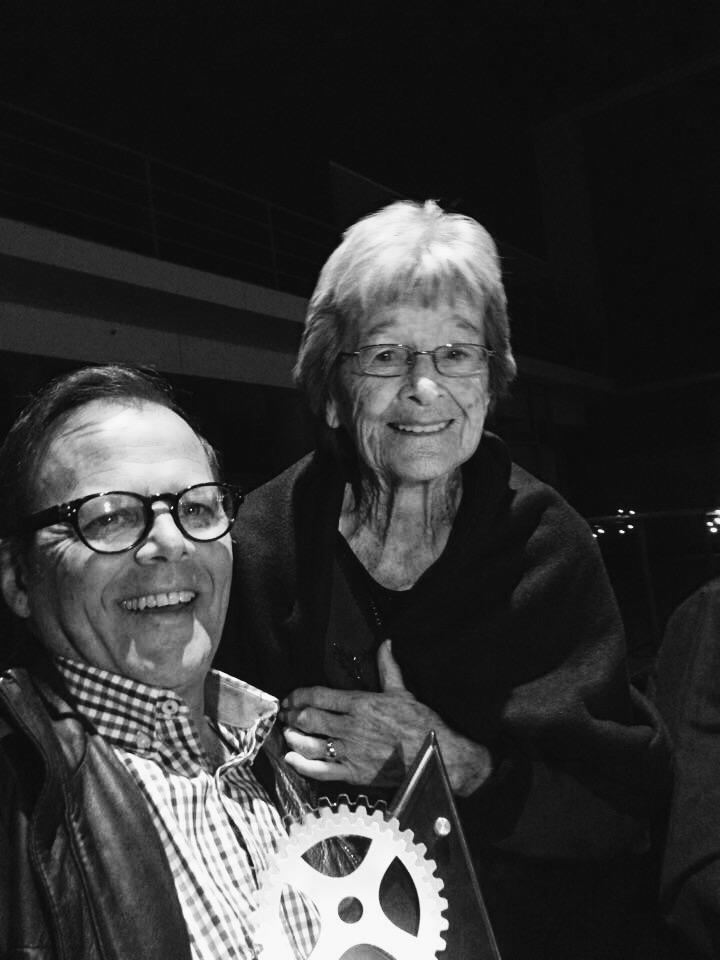
She was 95 years old and until her final days was active and healthy.  In fact, her last week saw her attend the Lifeline Brass Blokes Awards night (pictured above) as well as her great grandson being dedicated at Church.

If I had to narrow it down to what I am most thankful to my Mum for, it would be her lasting eternal legacy.  Let me explain.

She made some brave decisions at age 54.  After separating from my Dad, I remember how hard Mum would work to find cleaning jobs at night while offices were closed and even got her driver’s license, something she was proud of her entire life.

Not only that, but that was when she started a relationship with Jesus and became a Christian. This new life gave her hope, strength and joy.

I can remember Mum sitting for hours with her Bible, a notebook and studying with the help of audio teaching tapes and various resources.

Raising a teenage boy without his Dad in the picture, Mum knew I needed to have healthy male role models and she started taking me to Full Gospel Business Men’s breakfasts, prayer meetings and Church services.

It was at those meetings Mum introduced me to Christian men who were successful in their careers, had healthy relationships with their family and were not addicted to life controlling habits.

As a single Mum, she was laying the foundation for my future and it is because of her selflessness and courage, her commitment to Jesus, and even her ability to reach out and find help in her time of need, that I am who I am today.

If Mum had not been the brave person she was, I would not have met my wife Lenore at Church or raised my two beautiful girls in a healthy family environment.

Yes, my Mums’ legacy is having generational impact.

When I look back and realise that my Mum was my age and older when I was in my teenage years, I’m amazed at her energy, stamina and zest for life.  Right up until her last week, her life was full of blessing.

Mum made me who I am today because of the choices she made to raise me in the right environment.  She courageously turned my life around for the better.

What we can all learn from my Mum’s life:

It’s never too late to make a change for the better;
We need to do what we can and leave what we can’t to God;
Jesus never leaves us;
We need the help of others and we need to be a help to others;
God’s Word is life changing;
To live today with as much enthusiasm and energy as we have and get up tomorrow and do it all again; and
The last half can be the best half.

Thank you Mum, until we meet again.

Phil

I need help

When I was 13 years old my mum and dad separated, leaving my sister and I living with my mum in a tiny apartment. Each Friday I negotiated between mum and dad a weekly support sum given by dad to mum to help raise us. I hated it.

I clearly remember sitting with mum on one side of Epping train station in Sydney while dad sat on the other.  I would walk across the footbridge between them, back and forwards, communicating the terms of how much money mum would get for the week ahead.

At the age of 13, it seemed like dad was only providing for us, not out of love, but because of an unwilling obligation forced on him by mum. And I was mad at my mum that she couldn’t speak for herself and put me in the middle of them.

It’s only after decades have passed that I can see that I had drawn childish conclusions about both my mum and dad at that time. Those conclusions influenced reactions in my life, not only a fear during the early years of my marriage that Lenore would leave me suddenly, but also a difficulty in accepting help from others.

I grew up struggling to believe that when people did help it was out of love, not obligation.

I wonder what childish conclusions you may be living with to this day?

Today as a 55 year old who needs to rely more and more on the help of others, I now realise it was unfair of me to assume ill motives on others. There are people who are neither unwilling or under obligation that want to help and do help. I was the one with the issue.

Maybe like me, you need to acknowledge your own false conclusions.

What I now know is that my dad did love me and my mum was not using me. They had stuff going on in their lives that had nothing to do with me. My dad’s tough negotiating, for example, had more to do with his need for money to feed his addictions and pay his bills, not to mention his anger over mum leaving.

What about you? What childish conclusions about life and relationships are you living with?

Have false conclusions in your life stemmed from disappointments, from past experiences, or just incorrectly processing information?

Are you like me, reacting or responding to people and their actions from a dysfunctional mindset built upon false understandings and conclusions that have framed the way you now think?

You see, not only as adults do we need to put aside childish behaviours, but it may also be time to put away seeing life how a child sees life – recognising, there may be more to every story.

There is so much potential for our lives as we mature, not only in age, but in actions, and in how we perceive the world. I leave you with this verse today, 1 Corinthians 13:11:

When I was a child, I talked like a child, I thought like a child, I reasoned like a child. When I became a man, I put childish ways behind me.”

Phil

P.S. If you want to help me end MND / ALS, visit www.curemnd.org.au

Courage under fire

Tonight I am attending the Lifeline Brass Blokes Awards as one of five finalists.

This recognition is given to people who have been through adversity yet still find the time and courage to give back to their community.

It got me to thinking about courage. I wonder how you would describe a person with courage?  Are the only courageous people in our world the ones that are seen to do extraordinary acts of bravery?

I like to think of courage as something ordinary people like you and I can attain to each and every day as we go about our ordinary lives.  After all, many of the courageous actions of others are born out of circumstances they did not create but had to respond to the best they could.

In fact, sometimes the most courageous decisions we make are to do with matters unseen.

I think of Rugby players as strong people, running on to fields where they give it their all. I think of firefighters as brave people, running into burning houses to save lives. But what I think is most courageous is when those same people, not only face physical battles, but get real about their own internal challenges, their fight for integrity, or reaching out to help others.

Strength may come and go but courage has to do with what lasts: our mind, our heart, our spirit. The ability to be courageous is what we need to pass on to our children and our children’s children.

I think of my friend who before he was diagnosed with MND / ALS was a coal-miner, the breadwinner in his family.  He found his identity and purpose in being able to provide and protect those he loved, but disease has robbed him of his ability to function in that role.  Going deep beneath the earth required his skill and strength, but digging deep within himself to live, dealing with emotional pain and physical challenge, is what makes him courageous!

I think of another friend as she undergoes brain surgery for cancer with extreme resilience, but even more inspiring to me is how her and her husband show tremendous courage in the way they are living on such and emotional roller coaster through the journey of this valley.

Courage is about the ability to face our internal fears, challenges and setbacks.

It’s facing the fears of having to change the way you thought about life, its being willing to talk about things that you once could ignore or hide behind a brave face.

Courage is not the absence of feelings but the ability to face them and still engage in the present.  

The simple act of communicating your fears to loved ones and not repressing them may take more courage then racing into a burning building to save them.

People who reach out to the likes of Lifeline, a counsellor or loved one because they are facing haunting thoughts of suicide, or are living with depression, abuse or addiction – they are in my eyes courageous.  If that’s you, I would encourage you to reach out to someone. Yes it will take courage but I believe we all have the ability to show courage in the face of fear.

Courageous people:

  1. Admit they have a challenge.
  2. Realise they are not alone.
  3. Understand that the first step towards help is the hardest.
  4. Know that help is not a hand out but a hand up.
  5. Are committed to changing for the better.
  6. Face fear not suppress it.
  7. Open up to people they trust.
  8. Stay in accountable relationships.
  9. Pray; they speak of their anxieties to God the one who loves unconditionally.
  10. Stay openly honest and mindful of their challenges.
  11. Realise failure is a step forward.
  12. Hope for a better future.
  13. Make their fear less important than the desired outcome.
  14. Love themselves and others enough to change.
  15. Live in the present and not in fear of what may or may not happen.

Phil

Give your life!

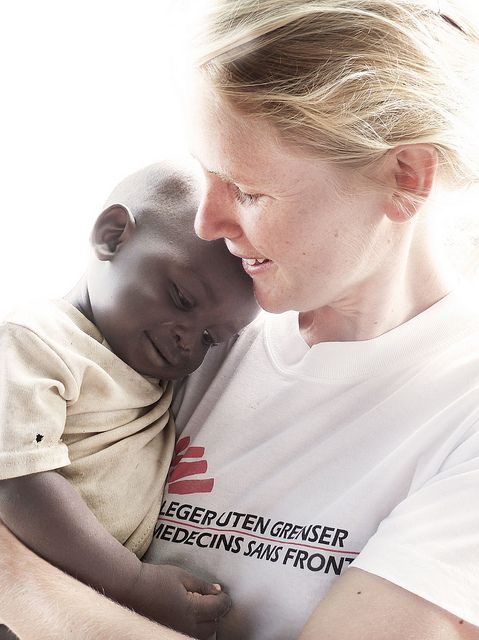
Via Doctors Without Borders - Sudan
Image via Doctors Without Borders – Sudan

You may have heard it said, “Greater love has no one than this, than to lay down one’s life for his friends.”

What does laying down our life look like in this day and age?

Consider this: your life is made up of time, years, weeks and hours.  When you go to work, you get paid for the time you invest or for the services that require your time.  That time represents your life.

For many people, for every working hour of their life, an exchange of money takes place.  If you have worked 40 hours for $1200, then you have given one hour of your life for a return of $30.  When you spend $120, you have effectively given what represents four hours of your life.

In this way, the money you receive and the time you use represent your life. 

That said, I wonder what you are giving your life to?   What are you “laying your life down” for?

There’s no doubt that there are many good causes to donate to and many opportunities to be generous with our time and resources.   It seems the ask is louder the larger our population grows and the more our world finds itself in need of help.

What you may not have considered is that when you do respond to support these causes, you are doing something significant.  You are giving of your life.

If you give money to support a child in a third world country, you’re giving your life to better the life of that child.  It’s a beautiful thing.

If you have donated to researching a cure for illnesses, you give your life for those people suffering and the ramifications of that will outlive you.

If you dedicate hours a week to better the lives of others (like my friend who is on a pension but time rich), you lay your life down.

I would encourage you to not only see yourself handing over dollars or “helping out”, but see yourself investing your life into whatever you give to.

Most of us will not be called upon to lay down our physical life for another.  But there is a way that we can all lay down our lives for others.  It’s through living generously.

Every day we have the opportunity to be generous with our time, our energy  and our resources.

Not only are you doing a good thing when you give of your life for others, but I believe it’s in giving that you experience a personal sense of well-being. I also believe you will have a sense that your life is more meaningful as it is attached to greater purpose.

A survey of 2000 people from different socioeconomic backgrounds found that those who volunteered at least 5.8 hours a month and those who gave at least 10% of their income had higher levels of happiness, less depression and had generally better health (Smith and Davidson).

An exchange of generosity and love will in itself have a benefit to both the giver and the receiver. 

Next time you give your time, energy or money for the benefit of others, know that in your own way you are laying down your life – and there really is no greater love.

Phil

Spirituality 101

Have you ever wanted to hear from God?  Is it possible for mere humans to experience God’s voice?

“Speak, We’re Listening.” These are the words framing Hillsong Conference 2015 which will see more than 30,000 people gather in Sydney’s Allphones Arena. I will be one of them.

This phrase, this cry, implies some powerful assumptions, namely:
That God is alive.
That God speaks.
That God wants to say something.
That we can hear God.

I wonder if you really believe that God speaks? And if you do, how much do you want to hear from Him?

It may start with belief in His existence, that He is a living God, but it also involves our understanding that He cares enough to respond to those who want to hear Him.

Personally, not only do I believe He can speak, I need Him to speak to me: His voice is life, it is my rock in a world of uncertainty.

My desire to hear His voice motivates my ears to listen. Without His voice, there is no fullness to our relationship. God-breathed words, His voice, are oxygen to my soul and infuse life into my spirit.

Like sheep are inclined to their shepherd’s voice for safety, I choose to align myself to the Good Shepherd’s voice. I know He cares for me and has my best interests at heart.

I have no doubt that God has good things to tell us.

Romans 10:17 (NKJV) says, “So then faith comes by hearing, and hearing by the word of God.”

You see, hearing God is no futile activity, it is the very means by which we develop faith. And at the same time, we need faith to hear Him. One feeds the other: faith, hearing, and hearing, faith.

So how do we hear His voice?

We listen: listen in prayer, listen in worship, listen to His Spirit, listen to His Word.

I remember staying at a friend’s home. I was having trouble hearing and his wife who was a nurse, washed my ears out by forcing water to push out the blockage. A bit weird, but it worked.

That’s just like God’s Word. It is like living water. It opens our ears to hear. Today, if you are having trouble hearing from God: try washing out your ears with a good dose of the Word of God.

When you read the Bible, the Spirit of God has something to work with. There are many times when in just reading, suddenly a verse jumps out. That’s the Spirit of God taking revelation and illuminating it to our spirit, speaking it into our life and situation.

Trust the presence of His Spirit in you to communicate what God is saying to you, with or without the details.  Be encouraged that His presence in you can speak directly to your spirit as your spirit is tuned to His voice.

What God says may not be all you want to hear, but it will be all you need to know and all you need for now.  It will be enough for you to take the next step of faith and when you do, He will speak again.

Let that same God-breath that inspired the very words on the pages of your Bible, breathe life into you as you read them.

Give it a try, make room for God to speak.

I, for one, am listening.

Phil

Keep an eye out for Fridays with Phil’s next post on Friday 17th July.

Seeing the unseen

Photo by Joey McCann

What you see is only possible by what you don’t see.

Wrapped in flesh is how we see each other.  It’s flesh that conceals and contains our organs and skeleton.  Imagine for a moment what it would be like to see a pumping heart or a digesting stomach when we looked at each other.  It is certainly best some things remain hidden, but not necessarily forgotten.

You body illustrates an important life experience.  Your life, as you see it, is made possible by what you do not see.  More importantly your life is interdependent on the lives of so many hidden significant others.

What is seen is only made possible by what is not seen. The Bible says in Hebrews 11:3, “By faith we understand that the worlds were framed by the word of God, so that the things which are seen were not made of things which are visible.”

Much of our world relies upon the hidden achievements of unseen people.

We buy bread each day with little thought about the bakers who rise at 3am to bake it.  Imagine for a moment what your world would look like if people suddenly stopped doing what they do today.  I wouldn’t like to imagine my world if you stopped doing what you do today.

If the garbage was not collected, if seed was not sown for harvesting fruit and vegetables we consume, if water treatment workers didn’t provide fresh water, if factory workers didn’t build the computer I’m typing with.

Our lives are so connected and we are in need of each other more than we realise.

So stop today: look at the stranger as they drive past, see the fellow passenger in the bus, or the person sitting near you at the café.  That person is connected to you.  Understand that if it wasn’t for them your life would be so much worse off.

Imagine the new depths of gratitude you could experience today if you started to see what you don’t see. 

See how important our lives are to each other.  Remember it takes a village!

A beating heart or a skeleton may be unseen but each is vital to survival in the flesh, as are the community of people we do life with. 

I think that if we could see behind the scenes, we may just live with a lot more gratitude for each other and the part we all play to live in community. “Thank you” may escape our lips a little more freely. 

Phil

Blog at WordPress.com.

Up ↑